

When selecting a light fixture, whether for your home, garden, or an industrial facility, one of the most critical technical specifications to consider is its IP Rating. This rating is your key to understanding how well a light is protected against solids and liquids, ensuring it is safe and suitable for its intended environment.
What is an IP Rating?
IP stands for Ingress Protection (or sometimes International Protection). It is a standard defined by the International Electrotechnical Commission (IEC 60529) that classifies the degree of protection provided by an electrical enclosure.
An IP code typically looks like this: IPXX (e.g., IP44, IP65). Each "X" is a digit:
First Digit (Protection against Solids): Ranges from 0 to 6.
Second Digit (Protection against Liquids): Ranges from 0 to 9.
Sometimes, you might see a letter at the end (e.g., IP67M), which provides additional information, but the two digits are the most important for consumers.
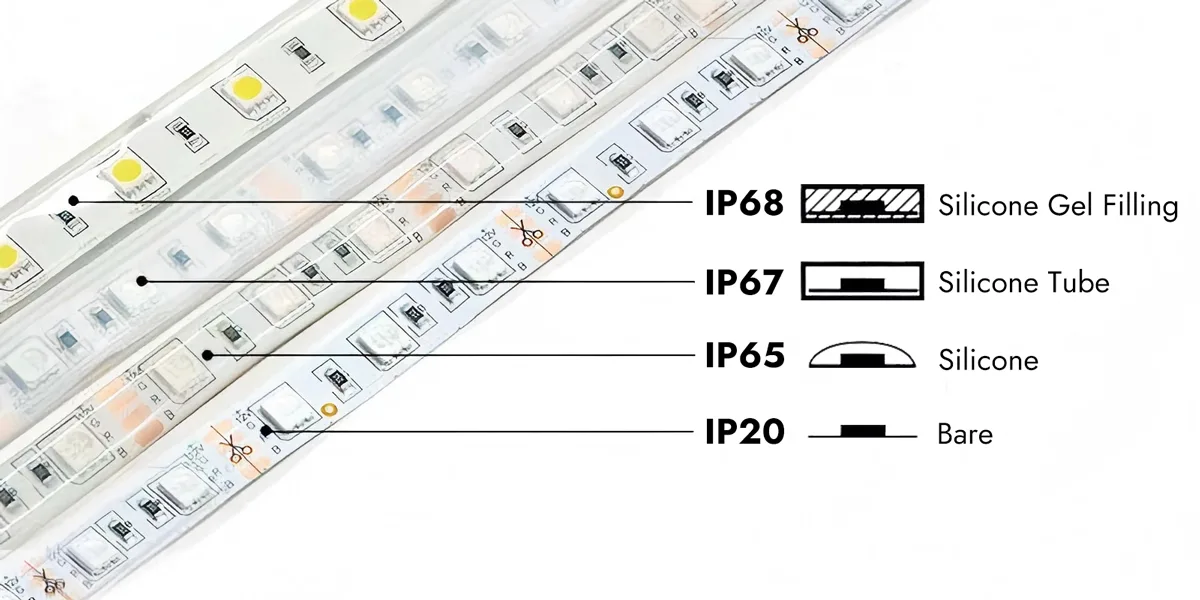
Here’s a breakdown of the digits relevant to luminaires:
Digit | Protection Against Solids (First Digit) | Protection Against Liquids (Second Digit) |
0 | No protection. | No protection. |
1 | Protected against solid objects over 50mm (e.g., hands). | Protected against vertically falling water drops (dripping). |
2 | Protected against solid objects over 12.5mm (e.g., fingers). | Protected against dripping water when tilted up to 15°. |
3 | Protected against solid objects over 2.5mm (e.g., tools, wires). | Protected against spraying water up to 60° from vertical. |
4 | Protected against solid objects over 1.0mm (e.g., small wires). | Protected against water splashes from all directions. |
5 | Dust Protected (Limited ingress, no harmful deposit). | Protected against water jets from a nozzle (6.3mm) from any direction. |
6 | Dust Tight (No ingress of dust). | Protected against powerful water jets (12.5mm nozzle) or heavy seas. |
7 | - | Protected against temporary immersion in water (up to 1m for 30 mins). |
8 | - | Protected against continuous immersion in water under specified pressure and time. |
9K | - | Protected against high-pressure, high-temperature water jets (specific to road vehicles, but seen in industrial cleaning). |
Common IP Ratings for Luminaires and Their Applications
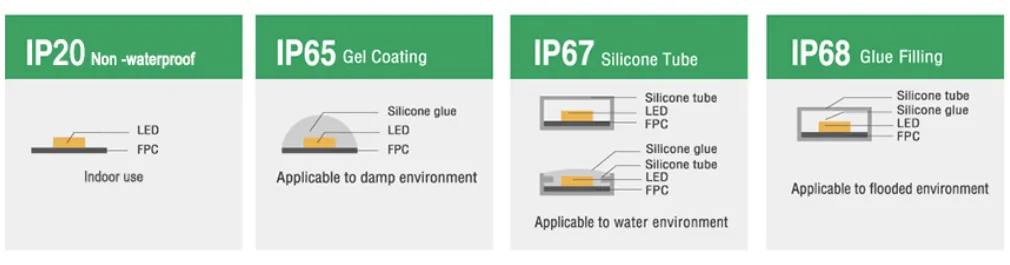
1. IP20 / IP21
Protection Level: Basic protection against larger solid objects (like fingers). No protection against dust. Protection against vertically falling water drops.
Typical Use Cases: These are for indoor, dry areas only.
Living rooms, bedrooms, and hallways.
Most standard ceiling lights, pendant lights, and table lamps.
Never use these in bathrooms, kitchens (near sinks), or outdoors.
2. IP44
Protection Level: Protected against objects over 1mm and splashing water from all directions.
Typical Use Cases: This is a common rating for areas with moderate moisture and occasional splashes.
Bathrooms (but not inside the shower or directly above the bath).
Kitchens (for lighting above worktops, but not directly over the sink hob).
Outdoor areas that are partially sheltered, like under a roof eave or a covered porch.
3. IP65
Protection Level: Dust-tight and protected against low-pressure water jets from any direction. You can hose it down.
Typical Use Cases: This rating is suitable for most outdoor and damp environments.
Fully exposed outdoor lighting (garden path lights, wall-mounted fixtures, facade lighting).
Garages and warehouses where dust and occasional water cleaning are concerns.
Indoor areas that need frequent cleaning, like food processing areas or workshops.
4. IP66 / IP67
Protection Level:
IP66: Dust-tight and protected against powerful water jets (e.g., heavy seas or strong pressure washing).
IP67: Dust-tight and protected against temporary immersion in water (up to 1m for 30 minutes).
Typical Use Cases: For harsh environments where fixtures are exposed to heavy rain, direct hose-down, or temporary flooding.
IP66: Landscape lighting in open fields, lighting on piers, or areas that need regular aggressive cleaning.
IP67: Lights that might be installed in the ground and could be submerged during a flood, or fixtures in fountains (not the light itself underwater, but the surrounding area).
5. IP68 / IP69K
Protection Level:
IP68: Dust-tight and protected against continuous immersion in water under conditions specified by the manufacturer (often deeper and longer than IP67).
IP69K: Dust-tight and protected against close-range high-pressure, high-temperature spray downs.
Typical Use Cases: These are for the most demanding applications.
IP68: Submersible lights for swimming pools, ponds, and water features. The luminaire is designed to be permanently underwater。
IP69K: Primarily for industrial and automotive settings, such as lighting in food processing plants that must withstand sterilizing steam-cleaning procedures.
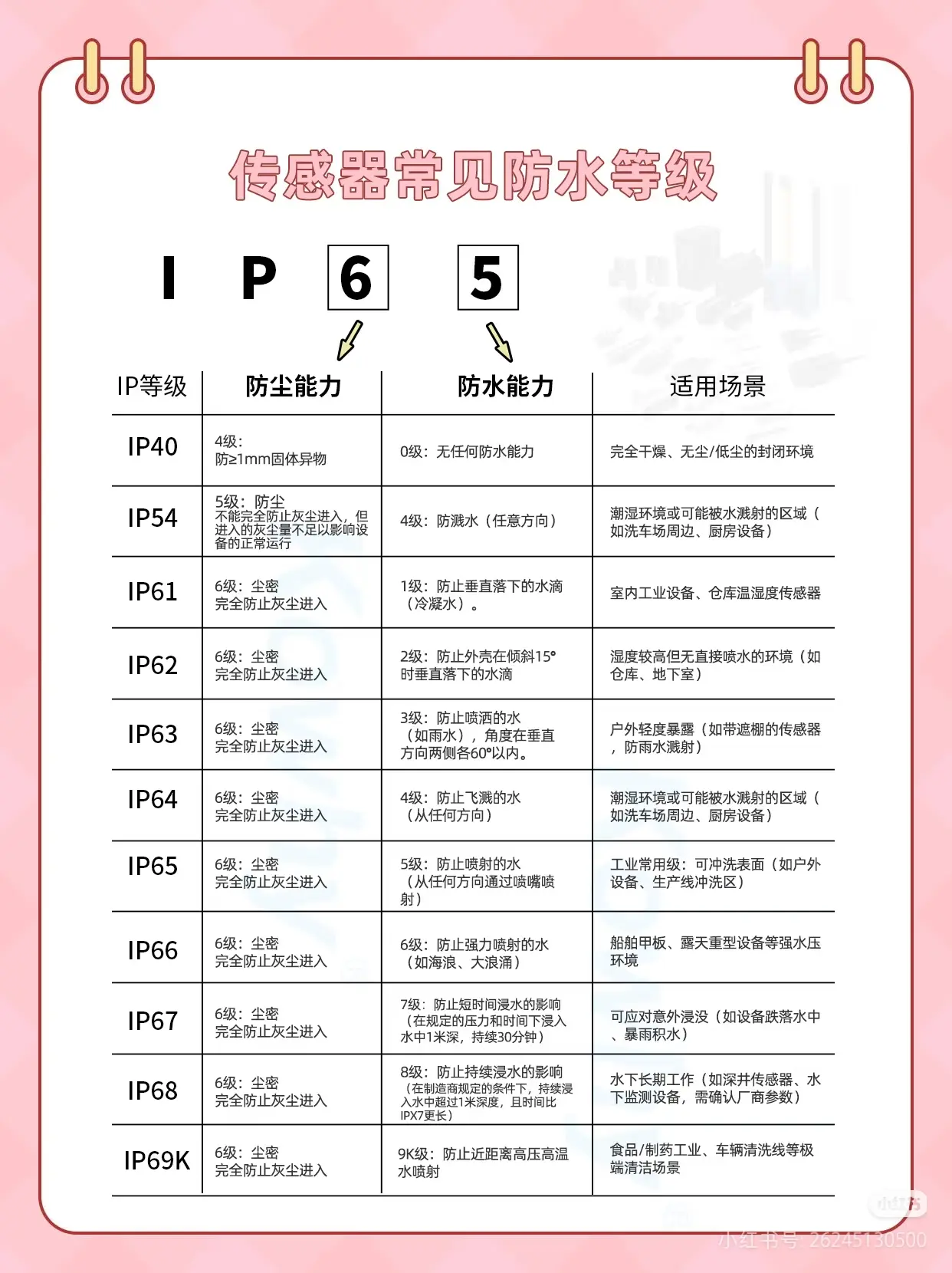
Quick Guide: Choosing the Right IP Rating
Location | Recommended IP Rating | Reason |
Bedroom, Living Room | IP20 | Dry, indoor, no dust or water risk. |
Indoor Bathroom (Zone 2) | IP44 | Protected from splashes from a sink or shower. |
Inside Shower/Bath (Zone 1) | IP65 (minimum IP44) | Direct exposure to water spray. |
Kitchen (Ceiling) | IP20 | If away from sink/hob. |
Kitchen (Above Sink) | IP44 | Protection against splashes. |
Covered Porch | IP44 | Protected from rain, but humidity and wind-blown moisture exist. |
Garden, Driveway, Uncovered Walls | IP65 / IP66 | Fully exposed to rain, dust, and weather. |
Underground or In-Ground Lights | IP67 / IP68 | Risk of temporary or permanent submersion in water. |
Swimming Pool (Underwater) | IP68 | Designed for continuous immersion. |
Conclusion
Always checking the IP rating of a luminaire is a simple but crucial step in ensuring the safety, longevity, and correct performance of your lighting installation. By matching the IP code to the environment, you prevent electrical hazards, premature failure, and ensure that your space is illuminated both beautifully and safely.