

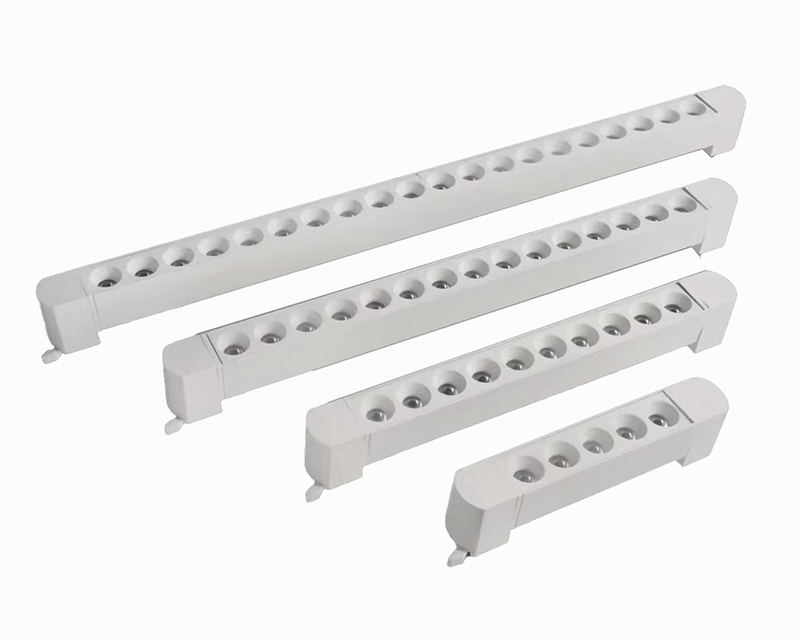
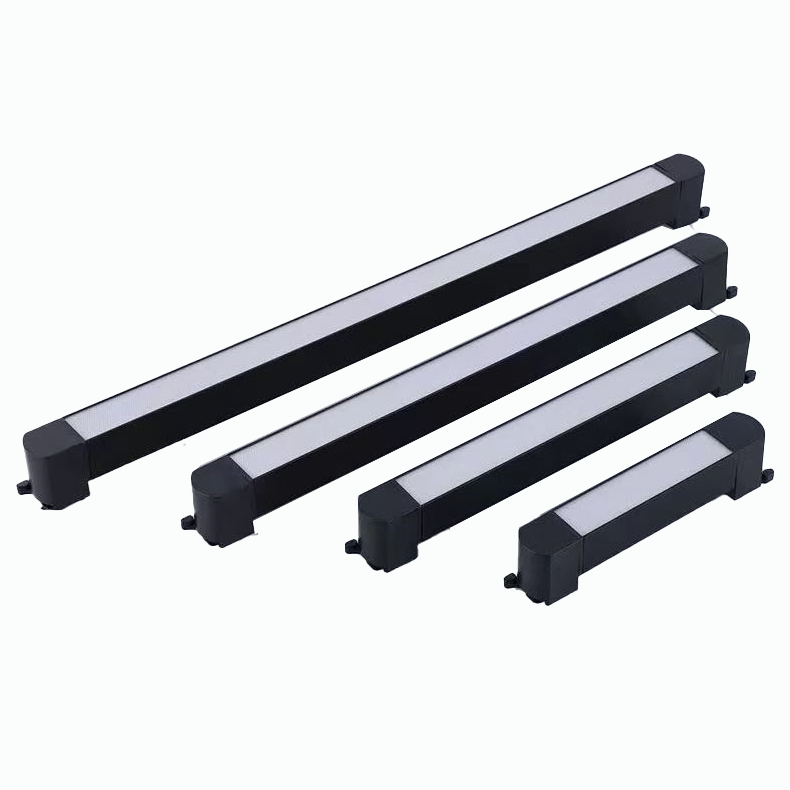
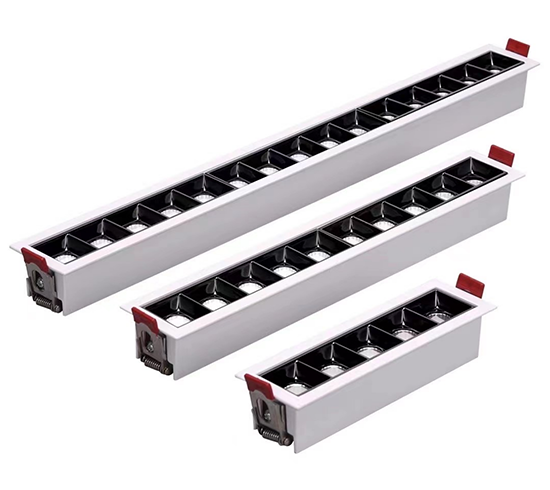
🕶️ 1. Differences in Thermal Management Efficiency (The Core Reason 🔥)
Material Properties: LED luminaires with white or light-colored housings—especially the heat sink sections—typically boast a higher solar reflectance coefficient. Crucially, during internal operation, white-coated surfaces (such as those achieved through powder coating or anodization) exhibit superior infrared emissivity compared to sleek, black-anodized surfaces.
Heat Dissipation Effects: When LED chips operate, they generate substantial heat. Efficient heat sinks require:
Absorption of internal heat: Heat sinks' fins/surface area must interface with the internal thermal air flow or conductive components within the luminaire.
Release of heat to the external environment: The surface dissipates heat through conduction, convection, and thermal radiation into the surrounding air.
Challenges with dark-colored housings (particularly smooth, black-anodized aluminum):
Low Emissivity: While black surfaces theoretically excel at thermal radiation dissipation (due to black-body radiation), real-world engineering—where black anodization prioritizes corrosion resistance and aesthetics—results in a dense, smooth oxide layer. This layer often reduces infrared emissivity below that of white surfaces (especially with high-quality white powder coatings). Lower emissivity hampers the ability to dissipate heat via radiation.
Radiative Heat Balance: In high-temperature settings, radiation contributes more significantly to heat loss. White coatings’ higher emissivity surpasses black in such scenarios.
Heat Absorption Effect (in specific environments): Outdoors or under direct sunlight, black housings absorb more solar radiation, raising the heat sink’s base temperature. This makes heat expulsion from the internal LEDs more arduous, as it requires overcoming a steeper temperature gradient.
💡 2. Variations in Optical Efficiency (A Secondary Factor)
Reflector Bowl/Chamber Reflection: Most luminaires incorporate internal reflectors or utilize the housing’s inner walls to redirect light. If the housing is black or features dark interior walls, it absorbs a portion of light rays that should have been reflected outward, directly diminishing the luminaire's luminous output efficiency.
Visual Contrast: From a purely perceptual standpoint, a bright light source against a dark backdrop (black housing) appears harsher to the human eye compared to a luminous setting (white housing). Subjectively, this creates an illusion that the black-housed light’s "effective brightness" is absorbed by the background, making it seem dimmer—though this is purely a contrast effect, not an actual reduction in physical lumen output. The measured lumens reflect true light emission, whereas visual perception stems from neural comparison.
🧪 Consequences: Elevated Junction Temperatures, Reduced Efficiency, and Shorter Lifespan
The inferior heat dissipation of black housings intensifies thermal buildup within the luminaire, manifesting as:
Higher LED Chip Junction Temperatures: LED chips operate at elevated temperatures.
Diminished Efficacy: A key LED characteristic is that luminous efficacy declines as junction temperature rises. At identical input power, this leads to poorer conversion of electrical energy to light, reducing actual lumens emitted—a core physical reason black-housed luminaires register lower measured lumens than their white counterparts.
Accelerated Lumen Depreciation and Shortened Lifespan: Heat is a primary culprit in LED degradation and aging. Prolonged operation at higher temperatures significantly hastens lumen depreciation, curtailing the luminaire’s service life.
Increased Stress on the Power Supply: High temperatures also undermine the driver’s efficiency and reliability, potentially exacerbating heat buildup and triggering premature failure.
📍 Summary
When selecting LED luminaires, housing color—particularly in the heat sink section—is critical for thermal performance. White or light-colored housings, with their superior surface emissivity and reduced external heat absorption, generally deliver enhanced heat dissipation. This translates to higher effective light output (more lumens) at the same power level, alongside lower operating temperatures, extended longevity, and greater stability. Differences in cooling efficiency become especially pronounced in high-power, outdoor, or heat-intensive applications.
If you’re eyeing high-performance lighting, prioritize white or light-colored housings for main light sources or powerful models. When design necessitates a black aesthetic, opt for premium products with expanded heat sinks, optimized engineering, or active cooling solutions to offset thermal shortcomings. 😄