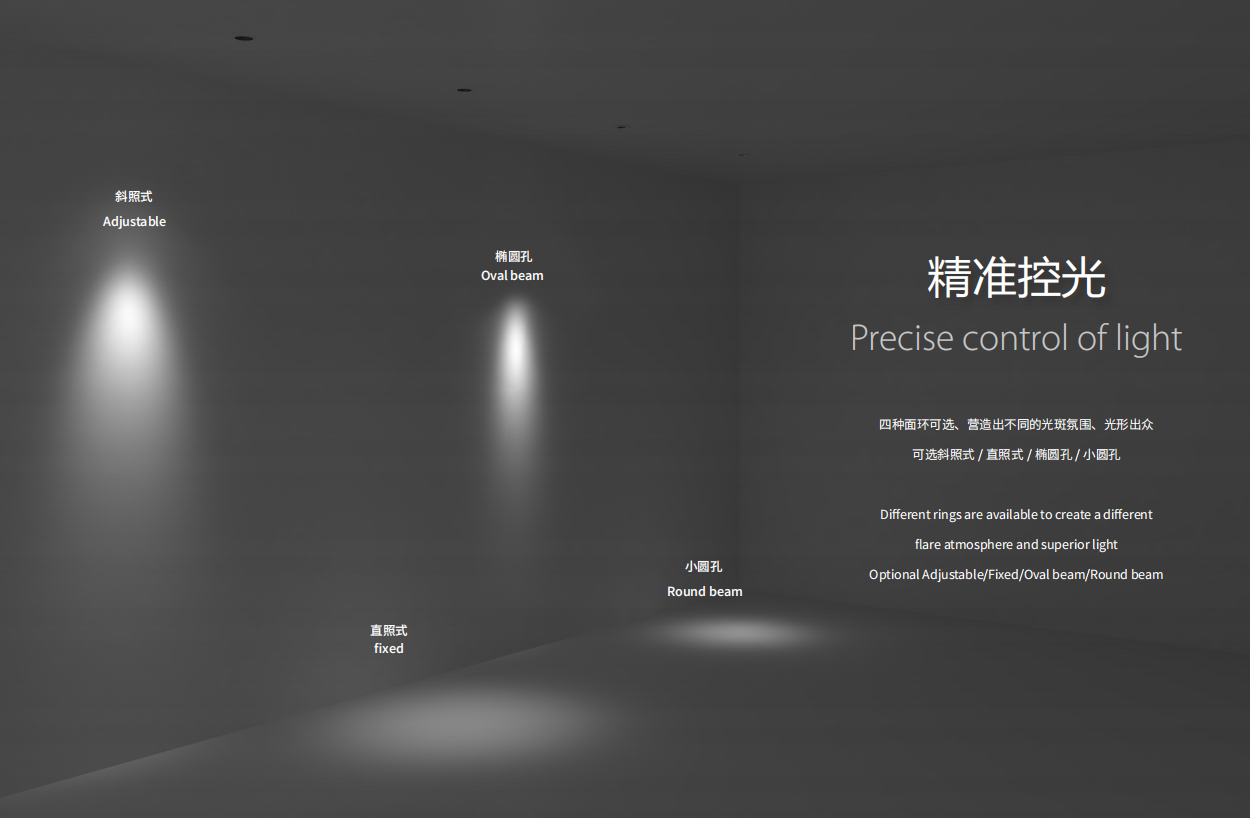

What is Beam Angle?
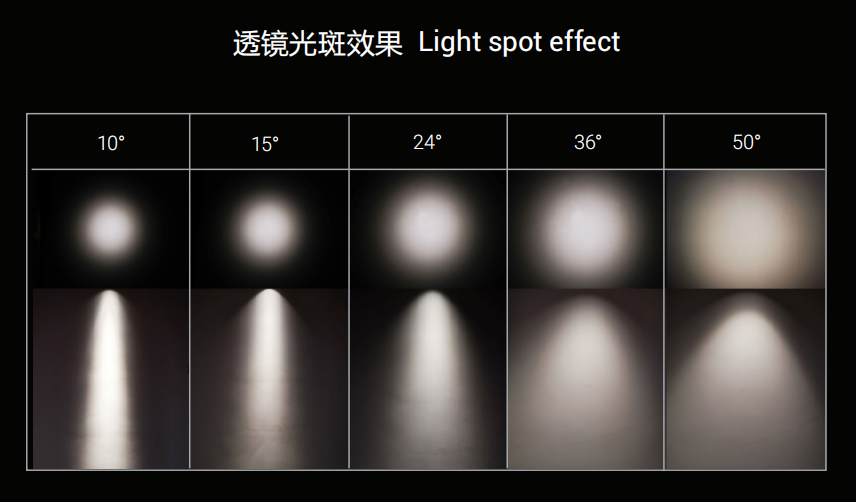
Simply put, beam angle is like the angle of the beam cone of a flashlight. It determines whether the light source acts as a "spotlight" or a "diffuse beam" in a space.
l Smaller angle:
The light is more concentrated, the center brightness is higher, and the contrast between light and shadow is stronger, suitable for highlighting a single object.
l Larger angle:
The light is more dispersed, the illumination range is wider, and the transition of the light spot is softer, suitable for providing uniform ambient light.
Home Beam Angle Selection Quick Reference Table
You can refer to the table below to quickly determine the appropriate beam angle range based on your space and purpose.
Area | Main Purpose | Recommended Beam Angle | Effect and Description |
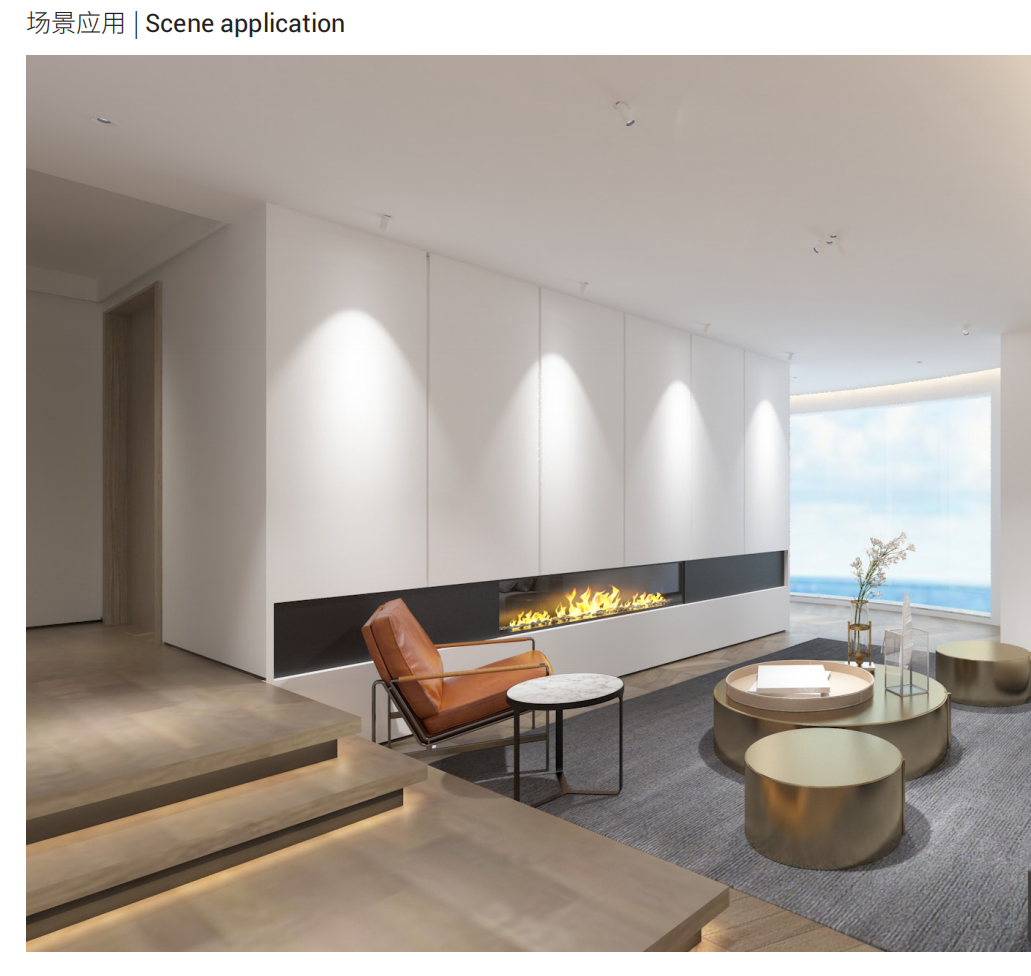
Living Room | Accent lighting (coffee table, decorative items) | 24° | The concentrated light clearly illuminates the coffee table area, creating a visual focal point, while the light spots are soft. |
Wall washer lighting (for sofa/TV background wall) | 36° | The light arcs that form full and even "hills" on the wall greatly enhance the sense of space and texture. | |
Basic ambient light | 60° Or Large | Providing wide and uniform lighting and avoiding dead corners in space, it is usually achieved by downlights or magnetic track lights. | |
Bathroom | Overall ambient lighting | 20°-40° | Create a warm and relaxing atmosphere, avoiding overly concentrated or diffused lighting. |
Bedside reading light | 15°-25° | It provides sufficient brightness for reading, while the beam range is controllable so as not to disturb your partner's rest. | |
Kitchen | Uniform lighting throughout (central area) | 40°-90° | Ensure the entire operating space is bright and free of shadows to guarantee safety. |
Supplemental lighting for the work surface (under cabinets) | 20°-30° | Narrow beam angle lamps serve as auxiliary lighting, providing ample, shadow-free light for delicate tasks such as chopping vegetables and cooking. | |
Hallway/Entrance Hall | Basic lighting | 50°-60° | Provide uniform lighting to avoid creating a "zebra stripe" effect with alternating light and dark areas. |
Dining Room | Accent lighting for dining table | 24°-45° | Focusing on lighting the dining table makes the food look fresher and creates a warm dining atmosphere. |
Study Room | Desk accent lighting | 15°-25° | The focused light provides precise illumination for reading and writing, reducing eye strain. |
Advanced Techniques and Avoidance Guide
To achieve more outstanding lighting effects, you need to understand the following key factors:
1. Installation Distance and Position
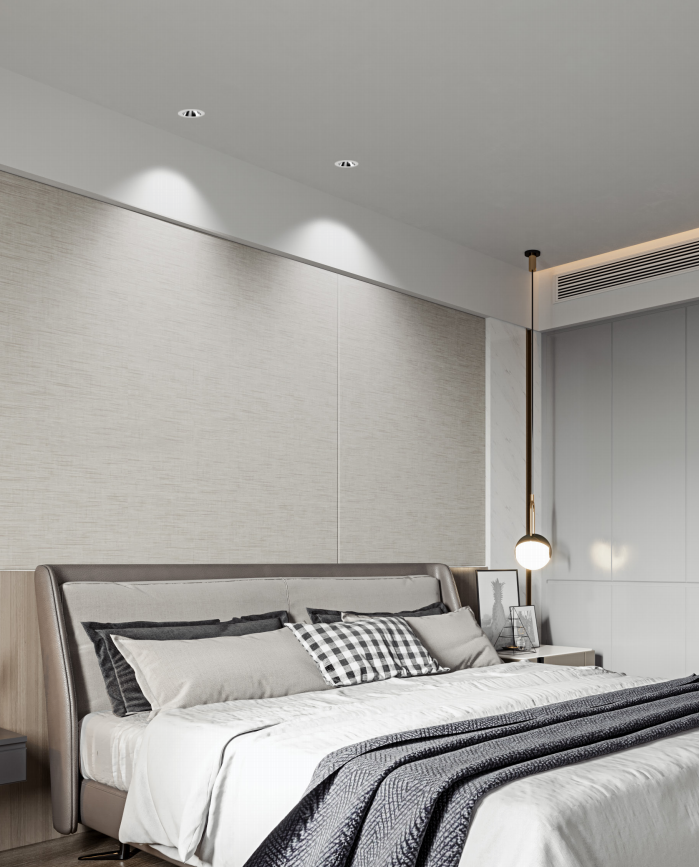
l Distance from the Wall: This is crucial for achieving a perfect "wall washing" effect. If the spotlight is too close to the wall, the light spot will reach the ceiling; if it's too far, the light spot will be uneven and sunken. Generally, a distance of 20-30 cm from the wall is recommended for the best-looking light spot shape.
l Spacing Between Light Fixtures: When installing multiple spotlights, spacing is important. A practical formula is: Light Spacing (cm) ≈ Beam Angle × 0.7. For example, for 36° spotlights, the spacing can be arranged at around 25 cm to avoid overlapping light spots or dark areas.
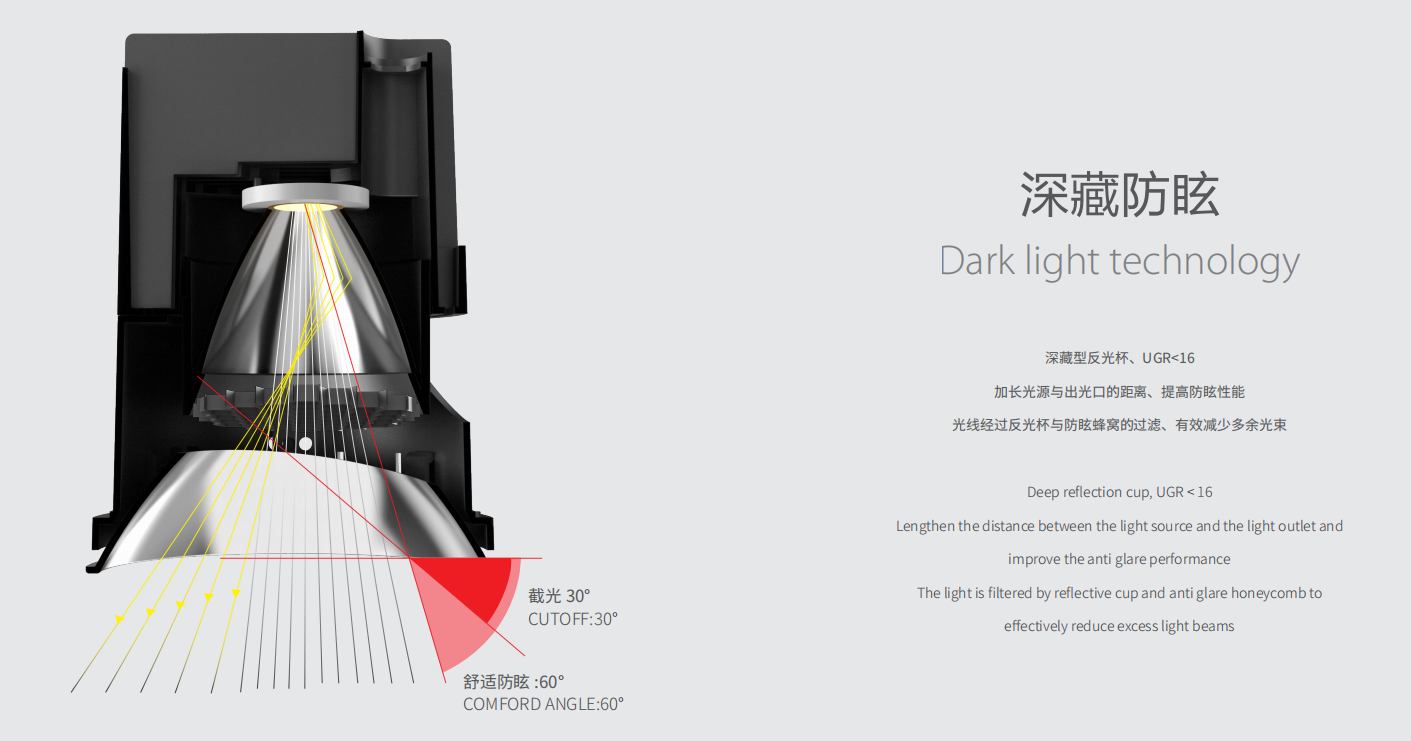
2. Shielding Angle – The Core of Anti-Glare
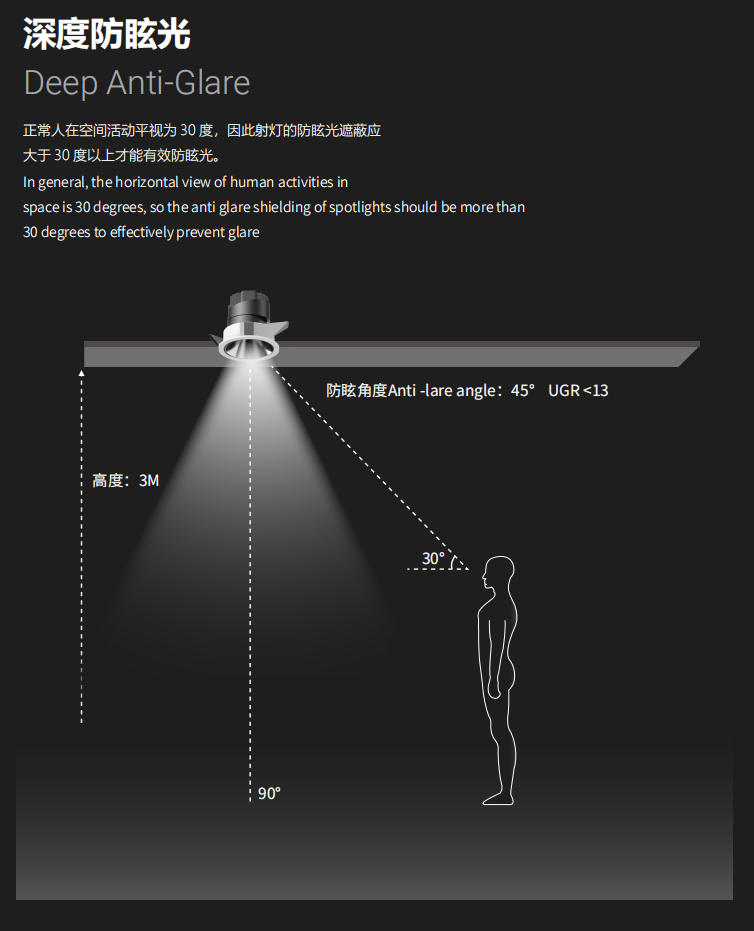
l Shielding angle is the angle between the horizontal line of the light outlet and the tangent of the light source.
l The larger the shielding angle (usually greater than 30 degrees, ideally 45 degrees), the better the anti-glare effect, meaning you won't see the glaring light beam when standing normally or looking straight ahead.
3. Choosing "deep anti-glare" light fixtures
l (with deeper lamp cups) is the best way to improve comfort.
4. Avoid common mistakes:
Using a uniform beam angle throughout the house: This is the biggest mistake! A layered lighting design requires mixing light fixtures with different beam angles. For example, use wide beam angles for ambient light and narrow beam angles to highlight focal points.
l Ignoring wall color: Dark walls absorb more light. To achieve the same brightness, you may need to choose a slightly narrower beam angle than on light-colored walls.
l Confusing IES and CIE standards: There are two main standards for measuring beam angle in the professional field (IES uses 10% luminous intensity as the benchmark, while CIE uses 50% luminous intensity).
l Pay attention to the standards labeled on the product when purchasing. For home environments, the CIE standard is usually sufficient.
1 Part Conclusion :
Choosing a beam angle is essentially a process of creating visual interest with light.
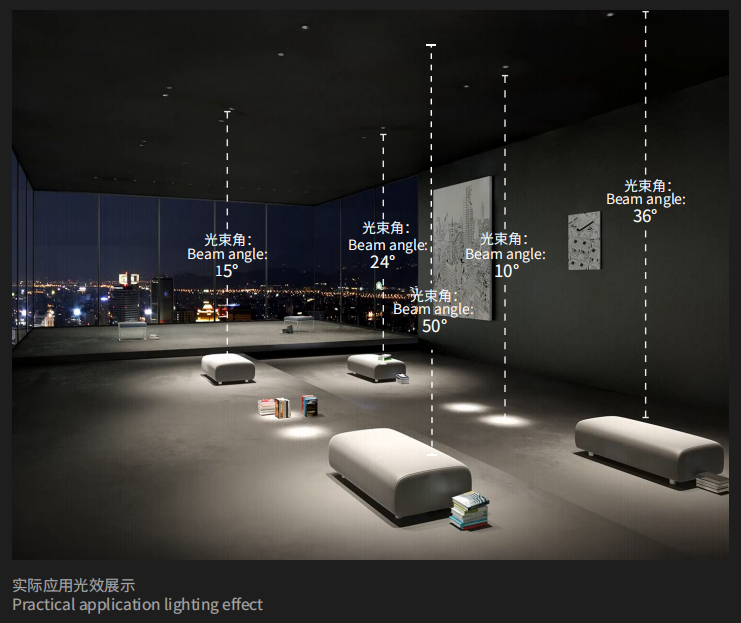
l To highlight a specific object (such as a painting or decorative item): Choose a narrow beam angle (<20°). To wash the walls or illuminate a specific area (such as a coffee table or dining table): select a medium beam angle (24°-36°).
l To evenly illuminate the entire space (such as a hallway or kitchen): select a wide beam angle (>40°).
l A very practical suggestion is: before purchasing in bulk, buy one or two sample lights with different angles to test them at home. This is the most intuitive and reliable method.
How to Add Depth and Layers to Your Home Through Lighting Design?
A layered lighting design can truly transform the atmosphere of a home. It's not just about illuminating a space; it's about using light to create art, shaping a sense of depth and emotional ambiance through contrasts of light and shadow. The table below summarizes the core elements of creating layered lighting; you can quickly review it first:
Lighting layers | Role and function | Common lighting fixtures | Core objective |
Ambient light | The basic space provides even lighting. | Ceiling lights, pendant lights, downlights | Provide basic lighting for activities, avoiding dimness. |
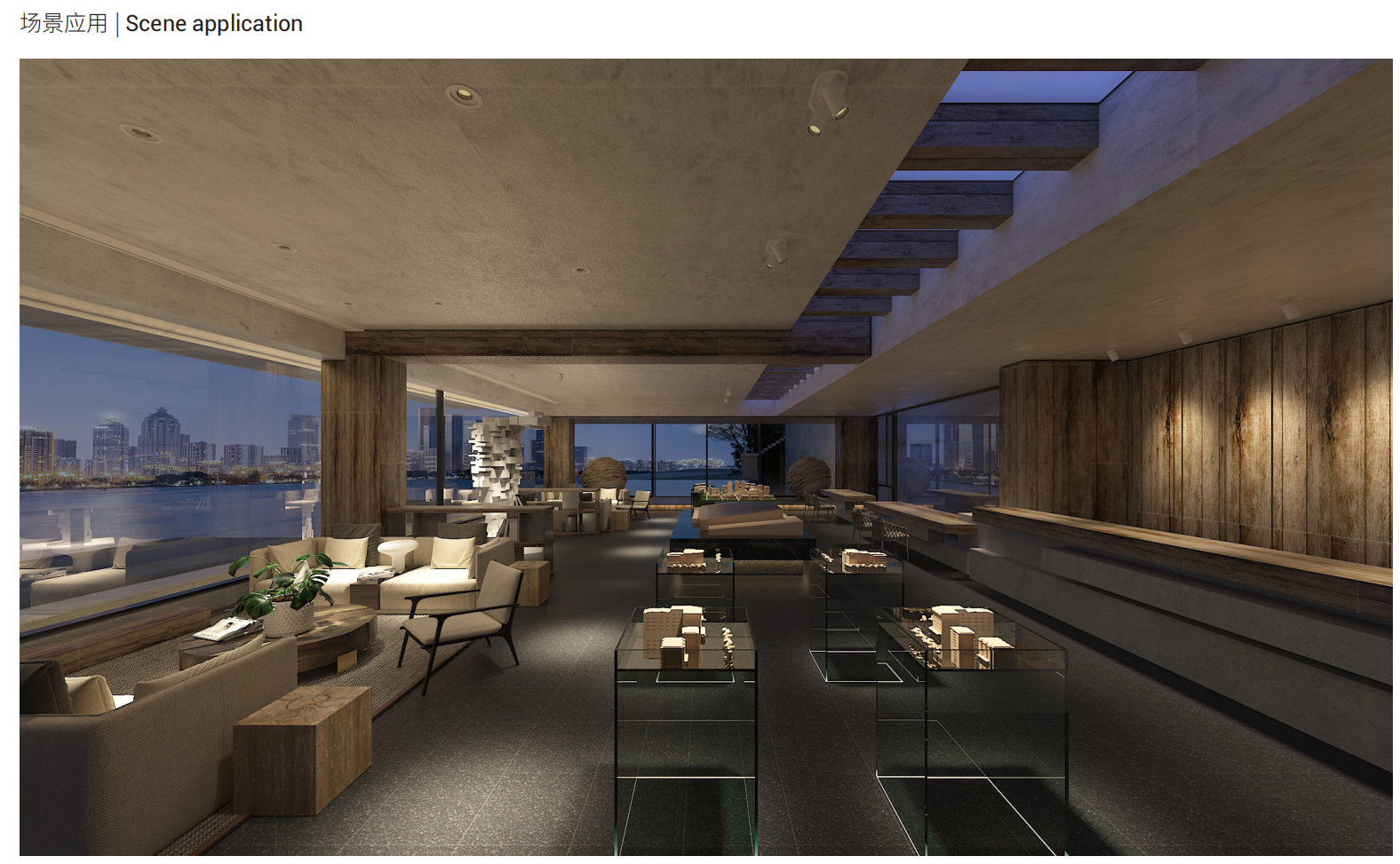
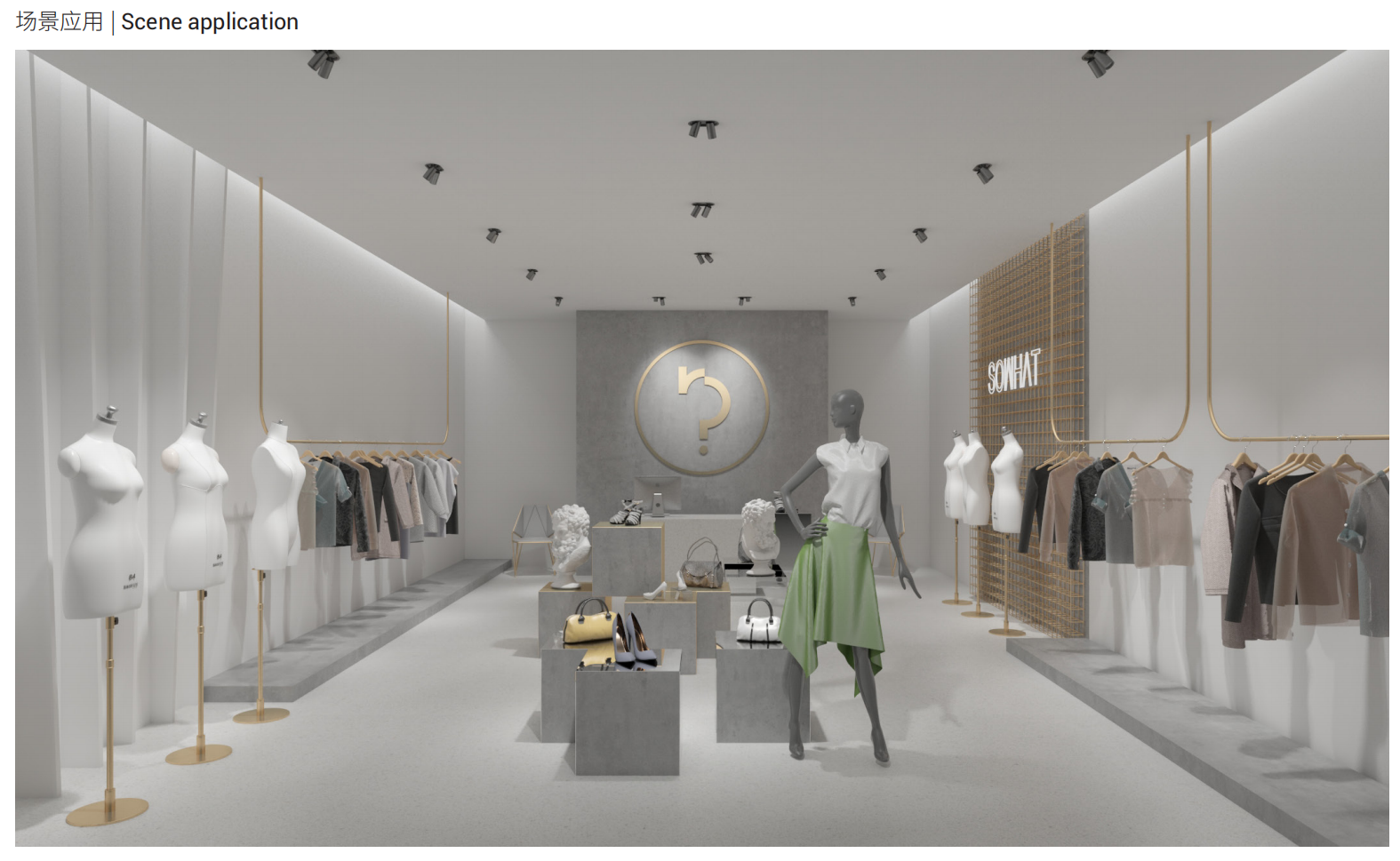
Functional light | Precise lighting to meet specific tasks | Spotlights, table lamps, reading lamps, vanity lights, under-cabinet lighting strips | Ensure adequate illumination in localized areas and reduce shadows. |
Ambient lighting | The finishing touch that enhances aesthetics and evokes emotion. | LED strip lights, wall lights, floor lamps, night lights | Create atmosphere, increase spatial depth and artistic feel |
I. Understanding Three Basic Lighting Elements:
Ideal home lighting is typically an organic combination of ambient light, functional light, and ambiance light.
l Ambient Light: Like foundation, it provides a uniform, soft base brightness throughout the space, ensuring basic activities can be carried out safely. However, relying solely on ambient light can make a space appear flat and lack focus.
l Functional Light: Like eyeliner, it's responsible for precise outlining. Functional light focuses on areas where you need to perform delicate tasks, such as a desk in a study, a cutting board in the kitchen, or a makeup mirror in the bathroom, ensuring these areas are well-lit and free of shadows.
l Ambient Light: This is like your blush and highlighter, used to create atmosphere. Ambient light uses indirect lighting methods, such as LED strips and wall lamps, to brighten walls and outline contours, greatly enhancing the sense of layering and interest in the space, creating a warm or romantic ambiance.
II. Key Points for Lighting Layout in Different Spaces:
Each room has a different function, and the proportion and techniques of lighting should be adjusted accordingly.
l Living Room: Rich Layers in the Core Area As the core area of the home, the living room requires the most diverse lighting combinations. Ambient lighting can be provided by ceiling lights or pendant lights, spotlights can highlight decorative paintings or the TV background wall, and a floor lamp or wall lamp can be placed in the corner of the sofa to meet reading needs. Through the cross-combination of these three types of lighting, the living room will appear bright and airy, yet also emotional and focused.
l Dining Room: Focused Lighting to Enhance Appetite The focus of lighting in the dining room is to make food look more delicious and create a warm dining atmosphere. Hanging a pendant light with a lampshade 70-80 cm directly above the dining table is the most effective way. This focused and warm light will naturally focus family members' attention on the table, promoting appetite and communication.
l Bedroom: Soothing Lighting for Relaxation Bedroom lighting should prioritize softness and warmth, avoiding glare. Distributed recessed lights or light strips can be used instead of a central main light for basic lighting. Dimmable wall lamps or table lamps can be installed by the bedside for convenient nighttime use and reading. Sensor-activated light strips can also be installed inside wardrobes for easy finding of clothes.
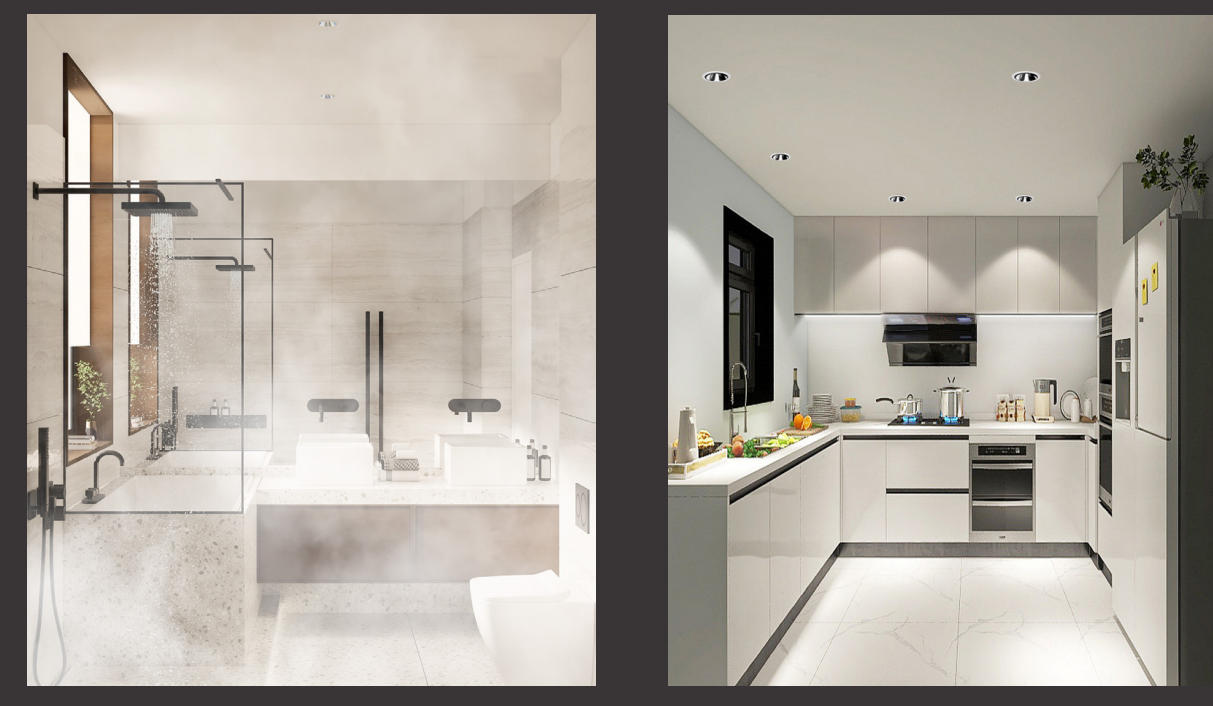
l Kitchen and Bathroom: Functionality First, Details Matter These two spaces have the highest requirements for functional lighting. In addition to overhead lighting, kitchens should have LED strips installed under the wall cabinets to provide supplemental lighting for countertops used for chopping and food preparation, eliminating shadows. Bathrooms also require bright and even ambient lighting. The best option for the mirror area is to install LED strips or wall lights on either side of the mirror to avoid downward lighting that creates shadows on the face, affecting makeup application or shaving.
III. Key Parameters: Color Temperature and Beam Angle
Besides the layout, the parameters of the lighting itself are crucial.
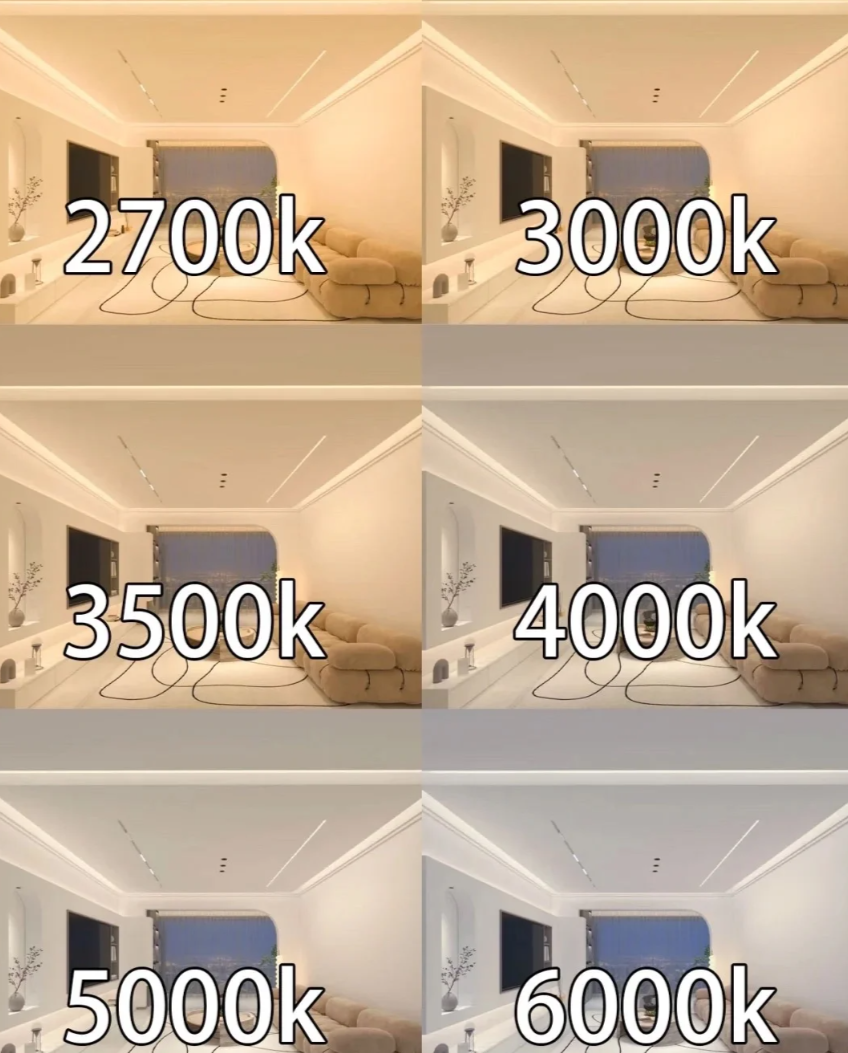
l Color Temperature: Determines whether the light is "cool" or "warm," measured in Kelvin (K). A simple principle is: use a low color temperature (2700K-3500K, warm yellow light) for rest areas and a high color temperature (4000K-5000K, neutral white light) for work areas. The color temperature should be as uniform as possible throughout the house; the difference between different spaces should ideally not exceed 500K to avoid chaotic lighting.
l Beam Angle: For spotlights, the beam angle determines the size and focus of the light spot. Smaller beam angles (e.g., 15°-24°) are suitable for accent lighting, highlighting decorative items; larger beam angles (e.g., 36°) are suitable for wall washing, creating a uniform arc of light.Key Parameters: Color Temperature and Beam Angle
l Besides the layout, the parameters of the lighting itself are crucial.
l Color Temperature: Determines whether the light is "cool" or "warm," measured in Kelvin (K). A simple principle is: use a low color temperature (2700K-3500K, warm yellow light) for rest areas and a high color temperature (4000K-5000K, neutral white light) for work areas. The color temperature should be as uniform as possible throughout the house; the difference between different spaces should ideally not exceed 500K to avoid chaotic lighting.
l Beam Angle: For spotlights, the beam angle determines the size and focus of the light spot. Smaller beam angles (e.g., 15°-24°) are suitable for accent lighting, highlighting decorative items; larger beam angles (e.g., 36°) are suitable for wall washing, creating a uniform arc of light.
Ⅳ. Advanced Techniques and Avoidance Guide
l Smart Dimming: Installing dimmer switches on main light fixtures or using smart lighting allows for flexible brightness adjustments based on different scenarios and moods, effectively enhancing lighting flexibility.
l Using Light to Divide Space: In open-plan spaces, using different brightness levels or even color temperatures for different functional areas can create visually flexible spatial divisions.
l Avoiding Glare: Choosing glare-resistant fixtures or adjusting installation angles to prevent direct light from entering the eyes is crucial for visual comfort.
l Unified style: Lighting fixtures are also part of soft furnishings, and their shape, material and color should be coordinated with the overall home style.
2 Part Conclusion :
Lighting is the magic of space. The most successful lighting design makes you unaware of the fixtures' presence, yet allows you to be completely immersed in the comfortable, pleasant, and layered atmosphere created by the light. Hopefully, these suggestions will help you create your dream home! If you have more specific questions about a particular space (such as a study or entryway), I'd be happy to provide further analysis.