

As a key component of the total cost of lighting products, the cost of packaging materials directly influences product pricing strategies. Lighting products with different positioning (such as economic, mid-range, and high-end) have significantly different demands for packaging materials, and the weight of packaging costs in pricing also varies accordingly. This impact is not only reflected in direct cost addition but also acts on the final price through indirect factors such as brand image and transportation loss, forming a complex pricing logic.
I. The Proportion of Packaging Material Costs in the Total Cost of Lighting Products
The proportion of packaging material costs in the total cost of lighting products varies greatly depending on product type, positioning, and packaging solutions, which in turn affects the basic accounting of pricing.
(1) Economic Lighting: Low Proportion but Sensitive Impact
For economic lighting products targeting the mass market (such as ceiling lights and table lamps with a unit price of 50-200 RMB), packaging material costs usually account for 5%-8% of the total cost. These products mostly use standardized packaging, with three-layer corrugated cartons + ordinary EPE foam as the core materials, and the packaging cost per set is controlled at 3-15 RMB. Since the profit margin of such products is inherently thin (with a gross profit margin of about 15%-20%), even slight fluctuations in packaging costs will be amplified in pricing. For example, if the price of EPE foam rises by 20%, the packaging cost per set increases by 0.5 RMB. To maintain the original profit, the product price may need to be increased by 1-2 RMB. However, consumers of such products are highly price-sensitive, and price increases may lead to a decline in sales. Therefore, enterprises often digest cost pressures by optimizing packaging structures (such as reducing the thickness of EPE foam) rather than directly raising prices.
(2) Mid-range Lighting: Moderate Proportion and Balancing Strategies
For mid-range lighting products with a unit price of 200-1000 RMB (such as simple-designed chandeliers and smart table lamps), packaging material costs account for 8%-12% of the total cost, with a packaging cost of 15-50 RMB per set. These products focus on the protective performance and basic aesthetics of packaging, often using a combination of five-layer corrugated cartons + custom EPE linings + color-printed outer boxes. With a gross profit margin of 25%-35%, enterprises have some room to balance packaging costs and pricing—they will not sacrifice packaging quality to reduce costs (to avoid an increase in transportation damage rates) nor over package to incur unnecessary expenses. For example, the packaging cost of a brand's smart chandelier was reduced from 30 RMB to 25 RMB (by replacing part of the EPE with honeycomb cardboard). The saved 5 RMB was not directly converted into a price reduction but was used to improve product functions (such as adding a Bluetooth control module), maintaining pricing competitiveness by enhancing product added value.
(3) High-end Lighting: High Proportion and Value Transmission
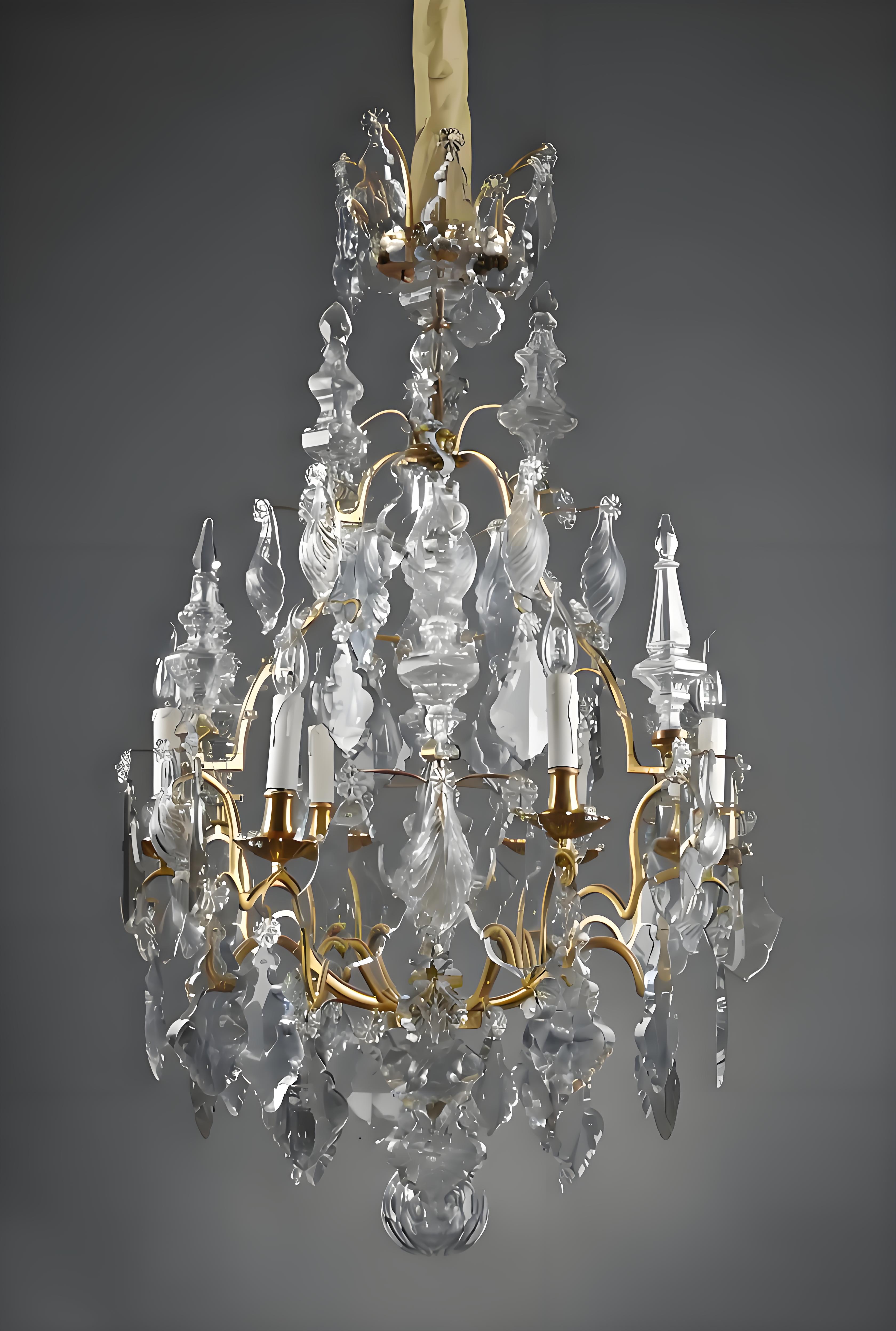
For high-end lighting products with a unit price of more than 1000 RMB (such as crystal chandeliers and artistic lamps), packaging material costs account for 12%-20% of the total cost, and some luxury-grade products can even reach 30%, with packaging costs ranging from 50 to 500 RMB per set. The packaging of such products is not only a protective tool but also an extension of brand value, often using high-end materials such as solid wood frames, velvet linings, and gold-stamped gift boxes, and some even come with custom maintenance tool kits. The high proportion of packaging costs is not regarded as a burden but is instead transformed into proof of "high-end sense" through pricing strategies. For example, a crystal chandelier priced at 8000 RMB has a packaging cost of about 800 RMB (accounting for 10%). The design of its wooden gift box and velvet lining makes consumers feel "worth the price". Enterprises may even further enhance the product's premium space by strengthening the ritual sense of packaging (such as attaching a collection certificate). At this time, packaging costs become an important factor supporting high pricing rather than a constraint.
II. Packaging Material Costs Affect Pricing Through Indirect Factors
In addition to direct cost addition, packaging material costs also affect lighting pricing through indirect factors such as transportation loss, brand image, and environmental compliance. These hidden impacts are often more significant than direct costs.
(1)Linkage Effect of Transportation Damage Rate
The quality of packaging materials directly determines the transportation damage rate, and the level of damage rate reversely affects the comprehensive cost, thereby acting on pricing. For example, if a company's glass chandelier uses ordinary bubble film packaging (costing 8 RMB), the transportation damage rate is about 8%, and the average repair/replacement cost for each damaged product is 50 RMB, which is equivalent to an additional expenditure of 400 RMB for every 100 products sold (8 pieces × 50 RMB), or 4 RMB per piece. If upgraded to EPE foam + corrugated sleeve packaging (costing 15 RMB), the damage rate drops to 1%, and the additional expenditure is only 5 RMB (1 piece × 50 RMB), or 0.05 RMB per piece. Although the packaging cost increases by 7 RMB, the comprehensive cost decreases by 3.95 RMB. Enterprises can reduce the price by 10-15 RMB while maintaining profits, enhancing market competitiveness. This logic of "increased packaging costs → decreased damage rate → reduced comprehensive costs → expanded flexible pricing space" is particularly obvious in fragile lighting products.
(2) Brand Image and Pricing Expectations
The choice of packaging materials shapes consumers' expectations of product value and indirectly affects their acceptance of pricing. Packaging for mid-range and above lighting has become a carrier of brand image—packaging using environmentally friendly materials (such as degradable honeycomb paper and recycled plastic) can convey a "sustainable" brand concept, making consumers more likely to accept a 5%-10% higher price than similar products. Conversely, rough packaging (such as thin cartons and inferior foam) may make consumers feel "not worth the price" even if the product quality is excellent, forcing enterprises to lower prices to match the low value perception brought by packaging. A survey shows that with the same product quality, consumers' acceptable maximum price for lighting with exquisite packaging is 15%-20% higher than that with ordinary packaging, which means that reasonable investment in packaging materials (even if the cost is slightly higher) can provide more flexible space for pricing.
(3) Transfer of Environmental Compliance Costs
With the tightening of global environmental regulations (such as the EU's packaging recycling directives and China's "plastic restriction order"), lighting enterprises need to use more environmentally friendly packaging materials (such as plastic-free cushioning materials and recyclable cardboard), and the cost of such materials is usually 20%-50% higher than traditional materials. To digest this part of the cost, enterprises often transfer part of it to pricing. For example, an LED lamp enterprise exporting to Europe changed its packaging material from PE bubble film to pulp molding to comply with the EU's plastic packaging ban, increasing the packaging cost per set from 6 RMB to 9 RMB. The enterprise increased the export price of the product by 3 euros (approximately 23 RMB), which not only covered the 3 RMB increase in packaging costs but also enhanced product competitiveness due to the "environmental certification", resulting in increased sales. In markets with strong environmental awareness, investment in packaging environmental protection has become a "legitimate reason" for pricing, and consumers are willing to pay a certain premium for sustainable packaging.
III. Packaging Costs and Pricing Strategies in Different Sales Channels
The impact of packaging material costs on pricing also varies with sales channels. The different packaging needs of online and offline channels lead to significantly different cost transmission paths.
(1) Online Channels: Packaging Costs Directly Affect Pricing
(2) Competitiveness Lighting sold online needs to go through multiple transfers and end-to-end distribution, requiring higher packaging protection, so the packaging cost is relatively higher (30%-50% higher than offline packaging). However, the price transparency of online channels is high, and consumers can easily compare prices, making it difficult to absorb increased packaging costs through premiums. Enterprises often have to "implicitly bear" them in pricing. For example, a popular Nordic-style chandelier online uses ordinary packaging (costing 10 RMB) in offline physical stores, priced at 399 RMB; the online version uses reinforced packaging (costing 15 RMB) to prevent damage, but the price is only 409 RMB (only 10 RMB higher than offline). Of the 5 RMB increase in packaging costs, 3 RMB is absorbed by the enterprise through profit compression, and 2 RMB is diluted through sales scale effects. Therefore, the pricing of online lighting is more sensitive to packaging costs, and enterprises usually strictly control costs through standardized packaging design and bulk material procurement to avoid losing competitiveness due to excessively high pricing.
(2) Offline Channels: Packaging Costs Transformed into Experience Value
Packaging for lighting in offline channels (such as specialty stores and home furnishing malls) focuses more on display and ritual sense, and consumers can intuitively feel the packaging quality. Therefore, packaging costs are more easily transformed into the experience value of products, with weaker constraints on pricing. For example, the offline store of a high-end lighting brand places products in custom leather storage boxes (packaging cost 80 RMB), with installation manuals and maintenance tools. When consumers experience them in the store, they will feel "the packaging is exquisite, so the product must be good". Even if the price is 200 RMB higher than the online version (with ordinary packaging costing 20 RMB), many consumers are still willing to buy. In the pricing logic of offline channels, packaging is part of the "experience package", and its cost is reflected indirectly through improving customer satisfaction and repurchase rates, rather than simply being added to the price.
IV. Balancing Strategies for the Impact of Packaging Costs on Pricing
Lighting enterprises balance the relationship between packaging costs and pricing through a series of strategies, ensuring packaging quality while avoiding excessive pricing that loses market share.
(1) Graded Packaging Strategy
Adopt graded packaging according to different product sales regions and channels: use simplified packaging for local markets with short transportation distances and few handling links (reducing costs by 20%-30%); use reinforced packaging for long-distance transportation or online channels; provide custom gift box packaging for high-end customers. Through differentiated cost input, packaging costs are more matched with pricing strategies. For example, for the same chandelier of an enterprise, ordinary packaging (costing 12 RMB) is used for local distributors, priced at 599 RMB; reinforced packaging (costing 20 RMB) is used for e-commerce warehouses in other regions, priced at 619 RMB; high-end custom versions use gift box packaging (costing 50 RMB), priced at 799 RMB. This not only meets the needs of different scenarios but also reasonably controls pricing differences.
(2) Material Substitution and Process Optimization
On the premise of ensuring protective performance, replace high-priced materials with low-cost ones, or reduce unit costs through process improvement. For example, use starch-based biodegradable foam instead of EPE foam (reducing costs by 15%) while ensuring cushioning effect by changing foam density; adopt die-cutting processes instead of manual cutting of cushioning materials to reduce material waste (increasing utilization rate from 60% to 90%), reducing material consumption per product by 30%. These measures can reduce costs without lowering packaging quality, leaving more room for pricing.
(3) Supply Chain Integration and Large-scale Procurement
Reduce procurement costs by integrating packaging supply chains (such as signing annual agreements with material suppliers and building own packaging factories), or dilute the mold costs of custom packaging through large-scale production. For example, a lighting enterprise with annual sales of 1 million sets can purchase corrugated paper at a price per square meter that is 10%-15% lower than small-batch procurement through bulk purchasing; the mold cost of custom blister linings (about 5,000 RMB) is 0.5 RMB per set for a production volume of 10,000 sets, but only 0.05 RMB per set for 100,000 sets, significantly reducing unit packaging costs and making pricing more competitive. The impact of packaging material costs on lighting pricing is not a simple "cost addition" but a joint effect through multiple dimensions such as direct cost proportion, indirect factor transmission, and channel differences. In general, the higher the proportion of packaging costs (such as high-end lighting and fragile lighting), the more significant the impact on pricing, but this impact can be transformed into pricing advantages through brand value and experience improvement. For products with low cost proportions (such as economic lighting), it is more necessary to strictly control packaging costs to maintain pricing competitiveness. Enterprises need to find the optimal balance between packaging costs and pricing according to their product positioning and market strategies, achieving the unity of protective effect, brand image, and market competitiveness.