

Modern residential lighting is rapidly evolving. Homeowners now prefer advanced LED recessed lighting for its efficiency and modern style. Our analysis of products from top led light manufacturers reveals the best recessed lights for any kitchen or bathroom project.
Our All-Around Top Picks:
Best Overall: Philips Hue White Ambiance Downlight - Praised for its adjustable color temperature and smart home integration.
Best Value: Sunco Lighting Wet-Rated Downlight - An affordable, reliable choice that is wet-rated for shower use.
Best for Task Lighting: Torchstar Gimbal LED Downlight - Features an adjustable gimbal to direct light precisely.
These recessed led light fixtures were selected for high color accuracy, reliability, and appropriate safety ratings. A quality LED Ceiling Light Manufacturer ensures their recessed lighting meets these standards. This is the best recessed lighting, featuring a superior LED Ceiling Light.
Understanding the Essentials of LED Recessed Lighting
Selecting the right led recessed lighting involves more than just picking a fixture. Homeowners must understand three core principles: brightness (lumens), color temperature (Kelvin), and color accuracy (CRI). Mastering these concepts ensures your kitchen and bathroom lighting is both beautiful and functional.
Brightness (Lumens): How Much Light You Need
Lumens measure the total amount of visible light from a source. The right lumen output prevents rooms from feeling either dim or uncomfortably sterile. The calculation depends on the room's size and purpose.
Kitchen Lumens Calculation
Kitchens demand bright, effective lighting for safety and precision. Experts recommend a layered approach to brightness.
Ambient Lighting: Aim for 50-75 lumens per square foot for general room illumination.
Task Lighting: Increase the brightness to 75-100 lumens per square foot over countertops, sinks, and stoves.
To calculate your need, multiply the room's square footage by the recommended lumens. For example, a 150 sq. ft. kitchen needs approximately 7,500 lumens for general ambient lighting.
Bathroom Lumens Calculation
Bathroom lighting must be bright and even, especially around the vanity. A general guideline is 20-50 lumens per square foot for the entire room. However, task areas require more focused light. The Illuminating Engineering Society (IES) uses foot-candles to measure light hitting a surface.
Room Area | Foot-Candles Needed |
|---|---|
General Bathroom | 70-80 |
Kitchen (General) | 30-40 |
Kitchen (Task Areas) | 70-80 |
A recessed light directly over a vanity mirror often creates unflattering shadows. Proper placement is key to functional bathroom lighting.
Color Temperature (Kelvin): Setting the Right Mood
Color temperature, measured in Kelvin (K), describes the appearance of light, from warm yellow to cool blue. The right Kelvin temperature can completely change a room's atmosphere.
3000K vs. 4000K for Kitchens
Choosing between 3000K and 4000K in a kitchen depends on its primary use.
3000K (Warm White): This temperature emits a soft, inviting glow. It is excellent for kitchens that double as social spaces, as it promotes a cozy, comfortable feeling.
4000K (Cool White): This light is crisp and invigorating. It mimics natural daylight, which boosts alertness and focus, making it ideal for food preparation and cleaning tasks.
Best Kelvin for a Spa-Like Bathroom
Creating a spa-like bathroom involves using different color temperatures. For grooming tasks like makeup application or shaving, a neutral-to-cool light between 3500K and 4000K provides accurate color representation.
Pro Tip for Relaxation: Install a secondary layer of warm recessed lighting (around 2700K) on a separate dimmer switch. Lowering the lights to a warm glow signals the body to wind down, reducing stress and creating a tranquil, spa-like retreat.
Color Rendering Index (CRI): Why 90+ is a Must
The Color Rendering Index (CRI) is a crucial, often overlooked, specification. It measures how accurately a light source reveals the true colors of objects on a scale of 0 to 100.
What is CRI?
A higher CRI value means better color accuracy. Sunlight has a CRI of 100. For interior spaces, a CRI of 90 or above is considered excellent. This ensures that colors appear vibrant and true-to-life, not washed out or distorted. Low-CRI led lights can make even the most well-designed spaces look dull.
The Impact of High CRI on Food and Skin Tones
In kitchens and bathrooms, high-CRI lighting is essential.
In the Kitchen: A 90+ CRI light makes food look fresh and appetizing. The rich reds of a tomato and the vibrant greens of lettuce appear vivid. This quality also helps in spotting food imperfections while cooking.
In the Bathroom: High-CRI led fixtures render skin tones naturally. This accuracy is critical for applying makeup correctly and ensures you look the same in the mirror as you do outside in daylight.
Wet vs. Damp Ratings for Recessed Lights
Safety is the most important factor when selecting led recessed lighting for kitchens and bathrooms. Electrical fixtures and moisture are a dangerous combination. For this reason, independent testing organizations like UL (Underwriters Laboratories) certify lighting products with specific location ratings. Understanding the difference between damp-rated and wet-rated fixtures ensures a safe and compliant installation. A fixture's rating indicates its ability to withstand moisture without compromising its electrical components.
Defining Damp-Rated Fixtures
A damp-rated fixture is designed to handle exposure to condensation and high humidity. It cannot, however, withstand direct contact with water spray or rain. The internal wiring and led components are protected from ambient moisture but are not fully sealed against liquid intrusion. Homeowners should install damp-rated recessed lighting in these common areas:
Bathrooms (outside of the shower and tub enclosures)
Kitchens, especially near sinks where steam is common
Screened-in or covered porches and patios
Basements with moderate humidity
Choosing a damp-rated fixture for these zones provides necessary protection without the higher cost of a fully wet-rated product.
Defining Wet-Rated Fixtures
A wet-rated fixture is essential for any location with direct exposure to water. These recessed lights feature waterproof seals and corrosion-resistant materials to protect all internal electronics from liquids. The construction of a wet-rated recessed light is robust, making it the only safe choice for certain applications. A wet-rated fixture is required for showers and open-air locations.
Safety First: The Shower Zone Always install a wet-rated recessed light directly above a shower or bathtub. The fixture's seal prevents steam and water spray from reaching the electrical connections, eliminating the risk of short circuits or electrical shock. A wet-rated led fixture provides peace of mind. The superior protection of a wet-rated design is non-negotiable for this area. The final installation of a wet-rated light must be flush and secure to maintain its integrity. This makes the wet-rated option the best lighting for shower safety.
Top Recessed Lighting Picks for Kitchens
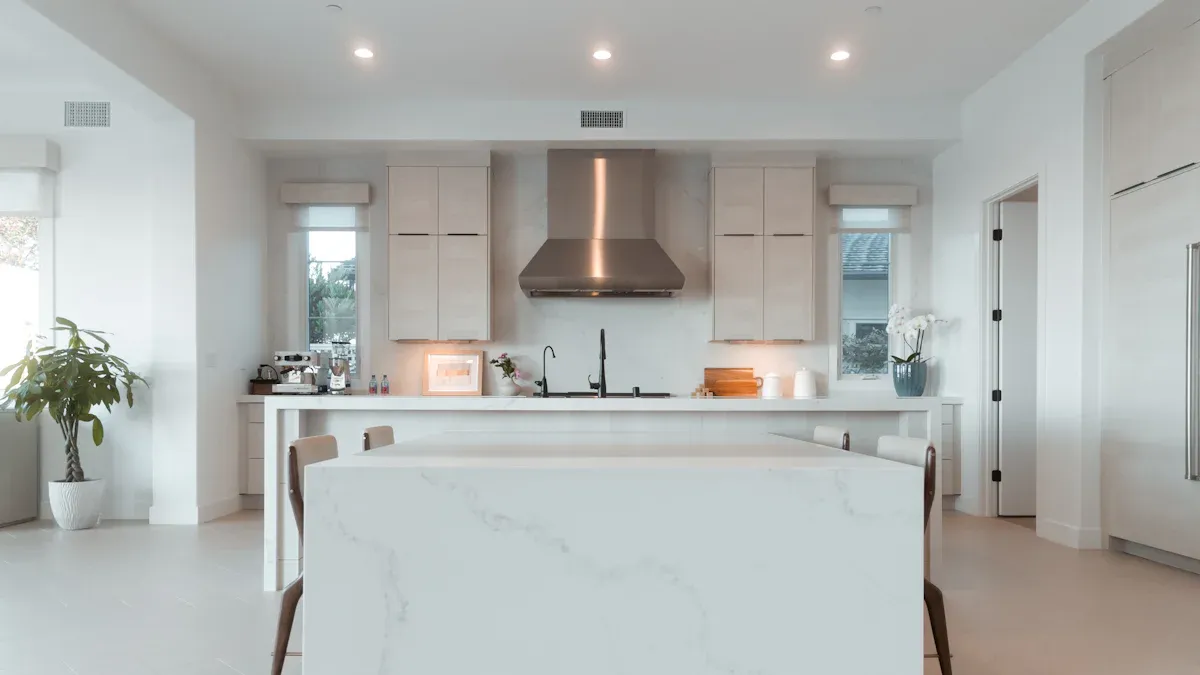
Choosing the best recessed lighting for a kitchen involves balancing brightness, color quality, and specific features. The following picks excel in different areas, from smart home integration to precise task illumination, ensuring there is a perfect fit for every design.
Best Overall: Philips Hue White Ambiance Downlight
The Philips Hue White Ambiance Downlight stands out as the premier choice for its unmatched flexibility and smart capabilities. It offers a complete lighting solution that adapts to any kitchen activity, from bright, cool light for cooking to a warm, dim glow for dining.
Key Specifications
This fixture delivers premium performance with a focus on user control and longevity. Its specifications reflect a high-end, modern product designed for seamless integration.
Feature | Value |
|---|---|
Color Temperature | 2200K - 6500K (Tunable White) |
Brightness | 700 Lumens |
CRI | 90+ |
Nominal Lifetime | 35,000 hours |
Warranty | 2 years |
Pros
The primary advantage of the Philips Hue system is its powerful ecosystem. Users can adjust color temperature and brightness with exceptional precision. This fixture supports multiple connectivity protocols, ensuring broad compatibility.
Existing Zigbee capabilities
Existing Bluetooth capabilities
Native Matter over Thread
This recessed light is compatible with major smart home platforms, allowing for effortless voice commands and automation.
Amazon Echo devices for voice control.
Google Home devices for voice control.
Philips Hue App (requires iOS 16 or later).
The long lifespan of 25,000 to 35,000 hours means homeowners will not worry about replacements for years.
Cons
The main drawback is the cost. Philips Hue products command a premium price, especially when factoring in the required Hue Bridge for full functionality. For users not invested in a smart home ecosystem, the advanced features may be unnecessary and not worth the higher initial investment.
Best for Task Lighting: Torchstar Gimbal LED Downlight
For kitchens requiring precise, directional light, the Torchstar Gimbal LED Downlight is an excellent choice. Its adjustable head allows homeowners to direct illumination exactly where it is needed most, such as over countertops, sinks, or islands.
Key Specifications
This fixture is built for performance and flexibility, making it a workhorse for any task-oriented space.
Brightness: 850 Lumens
Color Temperature: 5000K (Daylight)
CRI: 90+
Adjustability: 30° vertical tilt, 355° horizontal rotation
Rating: Damp-rated
Pros
The key feature is its adjustability. The Torchstar Gimbal LED downlight provides flexible lighting with a 30-degree vertical tilt and a 355-degree horizontal rotation. This range of motion eliminates shadows on work surfaces and highlights architectural details. Its high lumen output and crisp 5000K color temperature create an ideal environment for food preparation and cleaning. The high CRI ensures that food colors appear vibrant and true.
Cons
The 5000K color temperature, while excellent for tasks, can feel sterile or harsh for general ambient lighting. Homeowners may find it less suitable for kitchens that double as dining or social areas. Additionally, it lacks the smart features and tunable white capabilities of more premium options.
Best Value: Amico 6-Inch Ultra-Thin LED
The Amico 6-Inch Ultra-Thin LED offers a fantastic balance of performance and affordability, making it the best recessed lighting choice for budget-conscious projects. Its canless, wafer-thin design simplifies installation, especially in ceilings with limited space.
Key Specifications
Amico provides a reliable, no-frills led fixture that meets essential safety and performance standards.
Brightness: 1050 Lumens
Color Temperature: 5-CCT Selectable (2700K/3000K/3500K/4000K/5000K)
CRI: 90+
Certifications: ETL, FCC, IC-Rated
Design: Ultra-thin wafer with remote junction box
Pros
This fixture's greatest strength is its installation flexibility. The Amico 6-inch Ultra-Thin LED recessed light requires as little as 2 inches of ceiling space for installation. This is due to its IC rating, which permits contact with insulation. The selectable color temperature switch on the junction box allows users to choose the perfect mood before finalizing the installation. Its high lumen output provides ample brightness, and its multiple certifications ensure safety and reliability.
The Amico 6-Inch Ultra-Thin LED is ETL certified.
The Amico 6-Inch Ultra-Thin LED is FCC certified.
The Amico 6-Inch Ultra-Thin LED is IC-rated.
Note: The selectable color temperature feature provides great versatility, but the choice must be made before the fixture is fully installed in the ceiling.
Cons
While versatile, the color temperature is not dynamically adjustable like with a smart light. Once a Kelvin setting is chosen and the light is installed, changing it requires removing the fixture to access the switch. The build quality, while sufficient, may not feel as robust as more expensive alternatives.
Top LED Recessed Lighting for Bathrooms
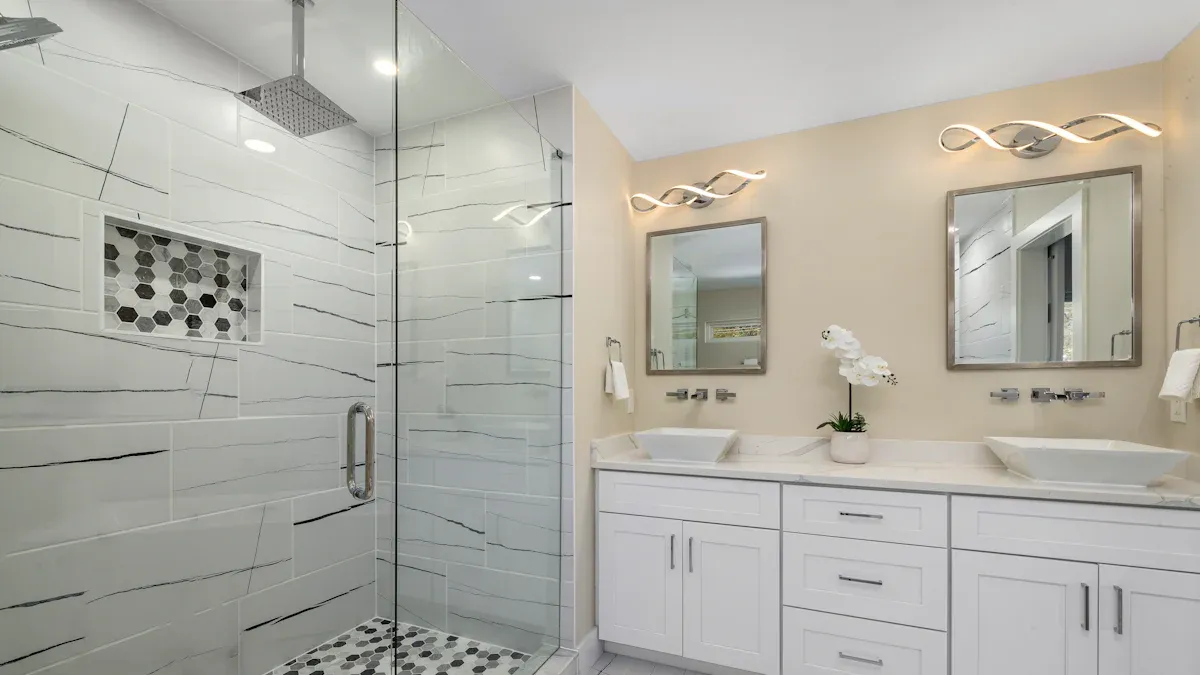
Bathroom lighting requires a special focus on safety and functionality. Fixtures must withstand moisture while providing clear, flattering light for grooming. The best recessed lighting for this space combines appropriate safety ratings with high-quality illumination. Our selections address the unique needs of showers, vanities, and modern smart homes.
Best for Showers: Sunco Lighting Wet-Rated Downlight
When safety is paramount, the Sunco Lighting Wet-Rated Downlight is the definitive choice for shower enclosures. This fixture is engineered specifically to handle direct contact with water. Its robust construction ensures long-term performance in the most demanding wet locations, making it the best recessed lighting for shower safety.
Key Specifications
The specifications highlight its durability and suitability for wet environments.
Feature | Value |
|---|---|
Brightness | 650 Lumens |
Color Temperature | 5-CCT Selectable (2700K-5000K) |
CRI | 90+ |
Rating | IP65, Wet-Rated |
Design | Baffle Trim |
Pros
The primary advantage of this recessed fixture is its exceptional water resistance. The Sunco wet-rated downlight achieves its superior protection through meticulous engineering.
A one-piece sealed aluminum die-cast housing provides a solid, impenetrable shell that also helps dissipate heat.
A liquid silicone perimeter gasket creates a seamless seal to protect internal components from steam and humidity.
Stainless steel clips securely fasten the fixture, ensuring the wet-rated seal remains intact over time.
This robust, wet-rated design provides complete peace of mind. The selectable color temperature is another major benefit, allowing users to choose their preferred ambiance before installation.
Cons
The focus on durability means this wet-rated fixture prioritizes function over form. It lacks the decorative trim options or smart features found in other models. Its design is purely utilitarian, which may not appeal to those seeking a more stylized look for their bathroom lighting.
Best for Vanities: Lithonia Lighting Wafer-Thin Downlight
For the area around the vanity, the Lithonia Lighting Wafer-Thin Downlight offers a sleek, modern solution. Its ultra-slim profile allows for installation in tight ceiling spaces, while its multiple finish options help create a cohesive design. This is an excellent recessed lighting choice for general bathroom illumination outside the shower.
Key Specifications
This fixture balances aesthetic flexibility with reliable performance for general bathroom areas.
Feature | Value |
|---|---|
Brightness | 675 Lumens |
Color Temperature | 3-CCT Selectable (3000K/4000K/5000K) |
CRI | 90+ |
Rating | Damp-Rated, IC-Rated |
Design | Canless Wafer |
Pros
The standout feature is its design versatility. The canless, wafer-thin body simplifies installation, making it perfect for remodels. More importantly, it helps homeowners achieve a polished, modern aesthetic by matching the lighting trim to other hardware. Available trim finishes include:
Matte White
This ability to coordinate with faucets and towel bars elevates the entire room's design. The selectable color temperature and high CRI ensure flattering, accurate light for grooming tasks.
Cons
This fixture is only damp-rated, not wet-rated. It is completely unsuitable for installation inside a shower or tub enclosure. While the color temperature is selectable, the choice is permanent after installation, lacking the dynamic adjustability of smart lighting.
Best Smart Option: Govee Smart Recessed Lighting
For those looking to infuse their bathroom with personality and cutting-edge technology, the Govee Smart Recessed Lighting is the top contender. This led fixture transforms a standard bathroom into a dynamic space with customizable colors, scenes, and automation.
Key Specifications
Govee packs its recessed lights with features centered on customization and smart home integration.
Feature | Value |
|---|---|
Color | RGBICWW (16 Million Colors + Tunable White) |
Brightness | 1100 Lumens |
Control | Govee Home App, Voice Control (Alexa, Google) |
Rating | Damp-Rated |
Special Features | Music Sync, 54+ Scene Modes, DIY Mode |
Pros
Govee excels at creating an immersive lighting experience. Users can choose from millions of colors or pre-set animated scenes to set any mood, from an energizing morning routine to a relaxing evening soak. The music sync feature is particularly unique.
Govee’s smart lighting solutions have truly elevated my home automation experience! One feature I’m particularly excited about is the music sync option. Imagine having your LED strips, recessed lights, and even the music box all dancing in perfect harmony to your favorite tunes!
Beyond entertainment, the Govee led system offers practical smart features.
Music Sync: Lights pulse and change color in time with music detected by your phone's microphone.
54 Dynamic Scenes: Offers a variety of pre-set animated lighting effects for any occasion.
16 Million DIY Colors: Provides nearly limitless color customization for a truly personal touch.
Cons
Like the Lithonia option, this lighting is only damp-rated and cannot be used in a shower. The full spectrum of features relies on the Govee app, which may not appeal to users who prefer simple wall-switch control. While versatile, the CRI for standard white light may not be as consistently high as dedicated, non-RGB fixtures.
Planning Your Recessed Lighting Layout
An excellent lighting plan is the foundation of any successful residential project. Proper placement and spacing of recessed fixtures are just as crucial as selecting the right product. A well-designed layout ensures even illumination, eliminates harsh shadows, and enhances the functionality of both kitchens and bathrooms. This section provides professional guidelines for creating an effective lighting grid.
General Rules for Spacing Your Lights
A common mistake is placing recessed lights too close together or in a single line, which creates an unappealing "runway" effect. A systematic approach to spacing prevents this and ensures balanced, comprehensive coverage.
The Ceiling Height Formula
While a simple "ceiling height divided by two" rule exists, a more practical method involves visualizing the room as a grid. This approach provides more uniform lighting.
First, measure the room's length and width.
Next, sketch the room and divide it into uniform rows and columns.
Then, decide on the number of lights needed for each row and column based on brightness requirements.
To find the spacing between lights, divide the row's total length by the number of lights in it.
Finally, determine the distance from the wall to the first light by dividing the spacing between lights by two. This method ensures even distribution and avoids dark spots.
Avoiding the "Runway" Look
The "runway" look occurs when recessed lights are installed in a single, straight line down the center of a room or hallway. This creates a narrow, tunnel-like feel and leaves the room's perimeter in shadow. To avoid this, homeowners should plan a grid pattern that distributes light across the entire ceiling, providing broader and more comfortable ambient illumination.
Ideal Kitchen Lighting Placement
The kitchen is a workspace that demands layered and targeted lighting. Placement should prioritize task areas to ensure safety and functionality.
Over Countertops and Task Areas
Effective task lighting is critical for food preparation. To illuminate countertops properly and minimize shadows from cabinetry, recessed lights should be positioned approximately 12-18 inches away from the cabinet faces. This placement directs light onto the work surface instead of the floor behind the person standing there.
Centering Lights Over an Island or Sink
Islands and sinks are high-activity zones. Centering one or more recessed fixtures directly above these areas provides focused, bright light. For a large island, spacing two or three lights evenly across its length creates a well-lit, functional centerpiece for the kitchen.
General Ambient Lighting Grid
Beyond task zones, a general grid of led recessed lighting provides overall ambient illumination. This grid should follow the spacing rules outlined earlier, creating a comfortable and inviting atmosphere throughout the room.
Perfect Bathroom Lighting Placement
Bathroom lighting must be both functional for grooming and flattering for appearance. Strategic placement is key to eliminating shadows and providing clear visibility.
Vanity Lighting to Eliminate Shadows
Placing recessed lights directly over a person's head at the vanity casts deep shadows on the face. A better approach involves a layered strategy.
Place recessed fixtures as close to the plane of the mirror as possible.
Use at least two recessed fixtures and space them so their light output overlaps for even coverage.
Supplement ceiling lights with wall sconces or bath bars on either side of the mirror to provide frontal illumination and eliminate shadows.
Placing a Light in the Shower
A single, wet-rated recessed light centered in the shower enclosure provides essential safety and visibility. This dedicated fixture ensures the area is well-lit, reducing the risk of slips and falls.
General Room Illumination
For general bathroom lighting, a few strategically placed recessed fixtures can illuminate the entire space. A grid pattern ensures that all corners of the room receive adequate light, making the space feel larger and more open.
Installation Guide: New vs. Remodel LED Lights
Proper installation is essential for safe and effective recessed lighting. The type of fixture a homeowner chooses often depends on the project's scope. A new build offers different options than a simple room update. Understanding the differences between housing types and the rise of canless technology helps ensure a smooth installation process.
Choosing Between New Construction and Remodel Housings
Traditional recessed fixtures require a housing, or "can," installed in the ceiling. The choice between a new construction housing and a remodel housing depends entirely on ceiling access. A new construction project allows for one type, while a retrofit project requires another.
What is a New Construction Housing?
New construction housings are designed for installation before the ceiling drywall is in place. These units have mounting brackets that attach directly to the ceiling joists. This method provides a very secure foundation for the lighting. Electricians typically install these during the rough-in electrical phase of a build. This is the standard for new homes and major renovations where the ceiling is open.
What is a Remodel Housing?
A remodel housing is the go-to choice for any retrofit project in a home with an existing, finished ceiling. These housings are designed to be installed from below. After a hole is cut in the drywall, the fixture is pushed into the opening. Metal clips then spring out to secure the housing against the top surface of the ceiling. This design makes a retrofit installation possible without tearing down the ceiling.
Feature | Remodel Fixtures | New Construction Fixtures |
|---|---|---|
Support Method | Clips secure to the top of the ceiling drywall. | Brackets screw or nail directly to ceiling joists. |
Installation Time | Designed for retrofit into existing ceilings. | Installed before ceiling drywall is in place. |
Primary Use | The best option for most retrofit applications. | Ideal for new builds or major gut renovations. |
Attic Access | No attic access is needed for this retrofit style. | A retrofit is possible if attic access is available. |
The Rise of Canless (Wafer) LED Lights
Modern led technology has led to the development of canless, or "wafer," recessed lights. These ultra-thin fixtures combine the light and trim into a single unit with a remote junction box. This design eliminates the need for a bulky housing, simplifying many installations.
Benefits of a Canless Design
Canless led recessed lighting offers significant advantages for retrofit work. The compact design requires very little clearance, making it perfect for ceilings with obstructions like pipes or ductwork. Installation is easier because it avoids cutting large holes for a can. This design also improves energy efficiency by creating a tighter seal, which reduces air leakage.
When to Choose Canless Fixtures
Homeowners should choose canless fixtures for almost any retrofit project. Their slim profile makes them the most versatile option for existing ceilings. They are especially useful in basements or top floors where plenum height is limited. The simplicity of a canless retrofit saves time and minimizes damage to the ceiling.
DIY vs. Hiring a Professional Electrician
Deciding whether to install recessed lighting yourself or hire a professional involves weighing cost against safety and expertise.
When DIY is Feasible
A DIY retrofit is possible for those with strong electrical knowledge. A homeowner can save on labor costs, which typically range from $75 to $200 per light. However, a DIY project requires a significant time commitment and the purchase of specialized tools. The installer must also be confident in handling wiring and securing permits.
When to Call a Pro
For most people, hiring a licensed electrician is the wisest choice. A professional ensures the installation is safe and compliant with all local electrical codes.
Safety and Compliance First! ⚠️ An electrician can complete the job three to four times faster than a typical DIYer. They can also identify potential issues with existing wiring. While the average project cost is higher, the peace of mind, warranty, and guaranteed safety are invaluable. This is especially true for complex wiring or a large number of recessed fixtures.
Smart Recessed Lighting: Is It Worth the Upgrade?
Smart technology has transformed home environments, and lighting is no exception. A modern lighting upgrade to smart recessed fixtures offers homeowners unprecedented control, convenience, and efficiency. This technology moves beyond a simple on/off switch, creating dynamic and responsive living spaces. Deciding if this upgrade is worthwhile involves understanding its core benefits and the available ecosystems.
Core Benefits of Smart LED Lighting
Smart led lighting provides more than just illumination. It integrates into a homeowner's lifestyle, offering enhanced security, energy savings, and ambiance control.
Voice and App Control
The most immediate benefit is effortless control. Homeowners can adjust their recessed lighting from anywhere using a smartphone app or simple voice commands through assistants like Amazon Alexa or Google Home. This remote access eliminates the need to walk from room to room to turn lights on or off.
Scheduling and Automation
Automation is where smart lighting truly shines. Users can program schedules to match their daily routines, ensuring lights are never left on unnecessarily. This feature significantly reduces energy waste.
Studies from Energy.gov show that implementing smart lighting can reduce energy consumption by up to 30%. LED smart bulbs already consume 70-90% less energy than traditional bulbs, and automation maximizes these savings. Furthermore, scheduling enhances home security by simulating occupancy when no one is home, deterring potential intruders.
Scene Setting for Different Moods
Smart recessed fixtures allow for complete personalization. Homeowners can create and save custom "scenes" for any activity.
A "Cook" scene might use bright, cool light for focus and precision.
A "Dine" scene could switch to a warm, dim glow for a relaxed atmosphere.
A "Relax" scene in the bathroom can use soft, warm tones to create a spa-like retreat. This adaptability makes a single room more versatile and functional.
Top Smart Lighting Ecosystems to Consider
Choosing the right smart system depends on a project's scale and a user's technical preferences. The modern market is dominated by three main approaches.
Philips Hue
Philips Hue is a market leader known for its reliability and extensive product line. It operates on a dedicated Zigbee mesh network via the Hue Bridge (hub). This setup ensures instantaneous response times and supports over 50 devices without slowing down a home's Wi-Fi. The system offers millions of colors and integrates with nearly every major smart home platform.
Lutron Caséta
Lutron Caséta is a professional-grade system prized for its rock-solid reliability. It is an excellent choice for foundational, whole-home control, especially in new builds or major renovations. Like Hue, it uses its own hub and proprietary Clear Connect RF technology, which guarantees performance is unaffected by Wi-Fi congestion.
Wi-Fi Direct Options
Brands like Govee, Wyze, and Kasa offer Wi-Fi direct led fixtures that connect straight to a home's router without a hub. This approach has a lower entry cost and simpler setup. However, performance depends on Wi-Fi signal strength, and adding too many devices (typically over 15) can slow down the entire network. This makes them best for single rooms or smaller apartments.
Homeowners find the best recessed lighting by focusing on two critical factors. A high CRI of 90+ ensures true-to-life colors in the kitchen. A proper Damp or Wet rating guarantees safety in the bathroom. With the right planning, this lighting transforms spaces.
A bathroom renovation created a spa-like oasis with layered, dimmable lighting for a serene environment.
A kitchen project used a grid of the best recessed lighting and under-cabinet fixtures to create an efficient, stylish workspace.
For a reliable starting point, the Philips Hue White Ambiance Downlight offers excellent performance and flexibility.
FAQ
How far apart should recessed lights be?
A general guideline suggests spacing lights apart by half the ceiling height. For an 8-foot ceiling, homeowners should place fixtures 4 feet apart. This method ensures even light distribution and prevents dark spots in the room.
Can I put a dimmer on any LED recessed light?
No. Homeowners must use fixtures specifically labeled as "dimmable." They also need a compatible LED dimmer switch, as standard dimmers often cause flickering or buzzing.
Pro Tip: Always check the product specifications for both the light and the switch to ensure compatibility before purchasing.
What is an IC-rated recessed light?
An IC-rated (Insulation Contact) fixture is safe for direct contact with ceiling insulation. This rating prevents fire hazards by ensuring the fixture does not overheat. Non-IC rated fixtures require several inches of clearance from all insulation materials.
How long do LED recessed lights last?
Most LED recessed lights offer a lifespan between 25,000 and 50,000 hours. With average daily use, a quality fixture can last over 20 years. This longevity makes them a cost-effective and low-maintenance lighting solution for any home.
Are canless (wafer) lights better than traditional cans?
Canless lights are ideal for remodels and ceilings with limited space. Their ultra-thin design simplifies installation. Traditional cans, however, often provide more trim and accessory options. The best choice depends on the specific project requirements and ceiling access.
What is the difference between lumens and watts?
Lumens measure a light's brightness, while watts measure its energy consumption. Homeowners should choose lights based on the required lumen output for a room, not the wattage. Higher lumens mean a brighter light, regardless of the energy used.
Why do my LED lights flicker?
LED flickering often results from a few common issues. A professional electrician can diagnose the problem, but typical causes include:
An incompatible dimmer switch.
Loose wiring connections.
Fluctuations in household voltage.