
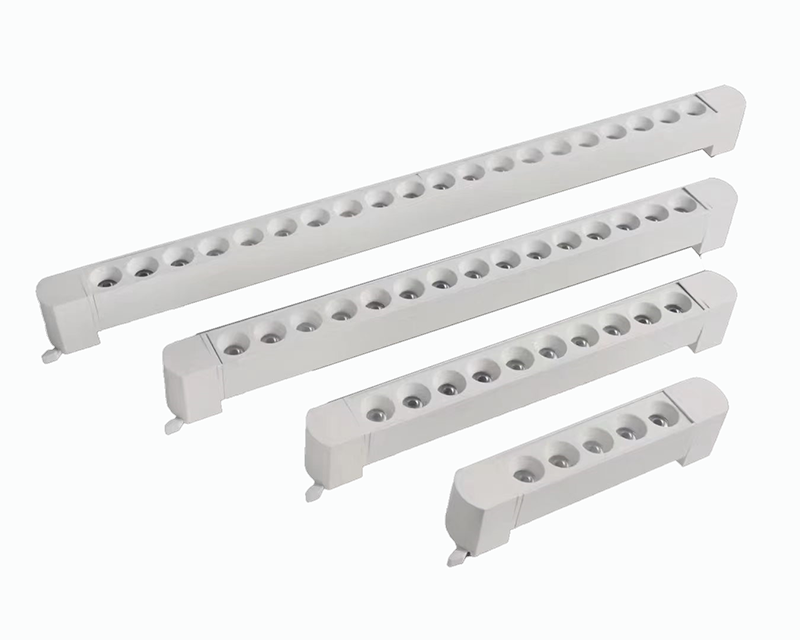
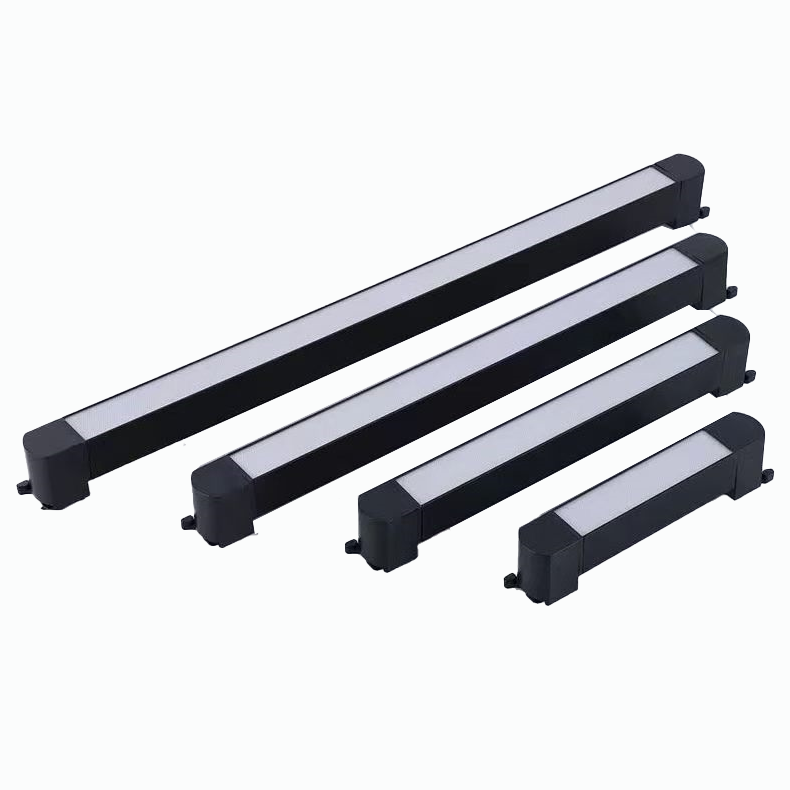
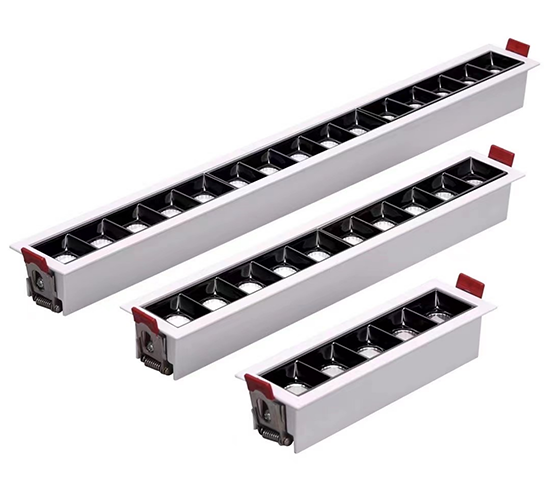
You can buy modular linear track lighting wholesale for retail in five steps: define the layout, specify technical requirements, verify compliance, compare wholesale quotes, and place a sample order. This order keeps your store project on budget and on schedule.
This guide is for retail buyers, store planners, and facilities managers. It helps you choose a modular system that fits your floor plan, meets code, and survives reconfiguration. You will find practical guidance on specifications, application fit, compliance checks, cost comparison, and supplier evaluation, with sourcing options that include wholesale partners such as L.I.O.N.
Key Takeaways
Follow five steps: define the layout, list the technical requirements, check compliance, compare quotes, and order a sample.
Modular systems give retail spaces flexibility, a consistent look, and easy upkeep.
Check the light output, color quality, and beam control to meet your store's needs.
Compare wholesale quotes one by one to find the real cost for each light point.
Order a sample to test how it works before you commit to a full order.
What Linear Track Lighting Offers Retail
How modular systems work
A modular system splits the run into pieces you can repeat. You mount a track or a set of pre-drilled linear fixtures, then add, remove, or move light modules along that line. Each module links to the next with a connector, and a shared driver powers the run. This design lets you build a continuous line of light across a ceiling, a wall, or a display zone without custom building for every bay.
The modular approach also makes service easier. You replace one module instead of taking apart the whole housing. L.I.O.N builds this idea into its linear fixtures, where modules swap out without opening the full body. That matters in a busy store, where downtime costs sales.
Why retailers choose them
Retailers pick linear track lighting for three practical reasons: flexibility, visual continuity, and predictable maintenance. A continuous line guides the shopper's eye down an aisle and frames merchandise cleanly. When you reset a floor plan, you slide or add modules rather than rewire the ceiling.
The system also grows with the store. You can start with a modest run and extend it later using the same track and connectors. Spare modules stay on the shelf, so a failed unit becomes a quick swap. Over several seasons of reconfiguration, this flexibility lowers your long-term fit-out cost and keeps the lighting scheme consistent across departments.
Technical Specifications That Matter
Light output and color quality
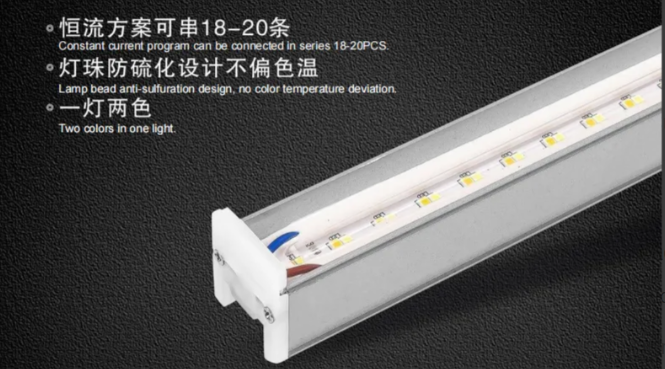
Light output shows how much usable light each module gives off. Check the lumen-per-watt number on the datasheet, since it sets your power use for a certain brightness. A fixture rated at 100 lm/W turns electricity into light well and stays cool. L.I.O.N's Printed Hole-Pattern Glass IP65 LED Linear Light LY-XTD-2008A1 B1 uses SMD LEDs at that rating, with a rated life over 50,000 hours. That long life means fewer replacements during a store's working years.
Color quality affects how goods look on the shelf. Ask for the color temperature range and make sure it covers your brand standards. The LY-XTD-2008A1 B1 goes from 1700–6500K, plus R/G/B/Y options for accent work. A wide range lets you warm a fitting room and cool a grocery aisle with the same fixture family. Also check color consistency across a run. Mixed batches can show visible shifts along a continuous line, and that flaw is hard to fix after installation.
Beam control matters for display lighting. Fixed narrow beams work well for tight accent work. Adjustable optics give you room to change direction later. This fixture offers 15°–90° beam angles, so you can graze a wall or wash a display without buying new hardware.
Track, connector, and driver specs
The track and connector set decides how cleanly your run goes together. Confirm the profile dimensions, the connector type, and the maximum run length per feed. A mismatch here forces field changes and delays your opening.
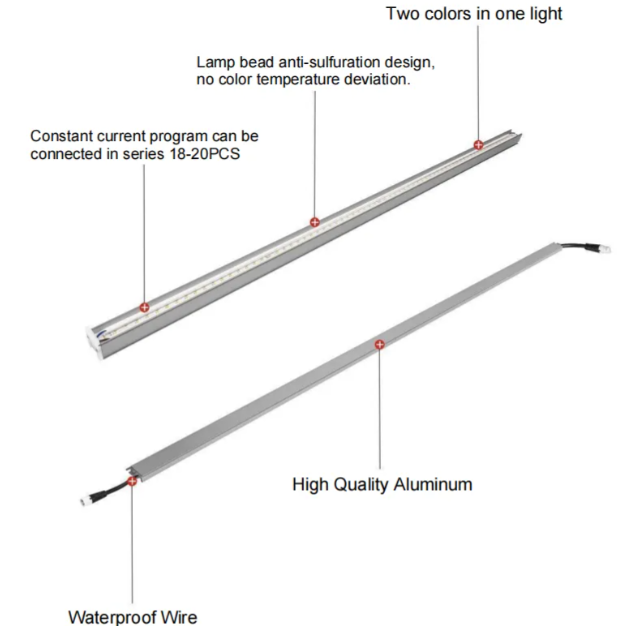
Driver design deserves equal attention. An integrated constant-voltage DC24V driver makes wiring simpler and supports safe use in wet locations. Confirm whether the driver sits inside the housing or in a remote enclosure, then plan access for service.
The LY-XTD-2008A1 B1 comes in two models, both at 12W with 48 LED chips and a 120° beam angle:
Model | Dimensions (mm) | Control |
|---|---|---|
LY-XTD-2008A1 | L1000/500/300 × W23 × H23 | ON/OFF or DMX512 |
LY-XTD-2008B1 | L1000/500/300 × W27 × H30 | ON/OFF or DMX512 |
The DMX512 option supports 256-level grayscale tuning and synchronized multi-fixture scenes. That feature suits dynamic facade and landscape work.
Match the fixture class to the location. IP65 linear fixtures with extruded aluminum housings fit facades, parking structures, and industrial zones next to retail. Indoor track modules fit interior ceilings and display runs. Both belong in a well-planned linear track lighting package, and each serves its zone best.
Matching Systems to Retail Spaces
Layouts for different store formats
Store format drives your layout. A compact boutique needs short runs that frame a few display walls. A supermarket needs long, continuous lines over aisles and coolers. A big-box store mixes both: perimeter accent runs plus grid lines over open floor.
Plan the run length against the fixture lengths you can order. The LY-XTD-2008A1 and B1 both come in 1000, 500, and 300 mm lengths. You can combine these to fill a bay without cutting housings in the field. Sketch the ceiling grid first, then mark each feed point. This step shows where you need connectors and where a driver needs service access.
Height and beam angle work together. A high ceiling over a main aisle calls for a tighter beam to reach the floor. A low ceiling over a display table calls for a wider wash. The 15°–90° adjustable beam on these fixtures lets one product family cover both zones.
Merchandising and reconfiguration needs
Merchandising changes with the season. A linear track lighting layout should absorb those changes without new wiring. Choose modules you can slide along the track and connectors you can open and reclose. Keep a small stock of spare modules and connectors on site.
Think about control early. An ON/OFF setup suits a simple sales floor. A DMX512 option supports 256-level grayscale tuning and synchronized scenes, which helps when you run promotional lighting across several fixtures. Decide this before you order, because the control choice shapes the driver and wiring plan.
Finally, plan for reorder. Confirm the supplier will stock the same module and connector after your opening. A system you cannot extend later loses its main advantage.
Compliance Checks Before Ordering
Electrical and safety certifications
Certification decides if your fixture passes inspection and stays legal on the sales floor. Start with the electrical safety mark your local authority accepts. In North America, look for a UL or ETL listing on the fixture and the driver. In Europe, confirm the CE mark and a declaration of conformity. Ask for the test report behind each mark, not just the logo on the box.
The IP rating matters for any wet or outdoor zone. L.I.O.N's Printed Hole-Pattern Glass IP65 LED Linear Light LY-XTD-2008A1 B1 carries an IP65 rating, which covers dust entry and low-pressure water jets. That rating suits facades, parking structures, and industrial zones next to your store. Confirm the rating applies to the assembled fixture, including the connector joints.
Check the driver input against your building supply. The LY-XTD-2008A1 B1 runs on constant-voltage DC24V with an integrated driver. Verify the transformer or power supply you pair with it carries its own listing. A listed fixture on an unlisted driver fails inspection.
Supplier documentation to request
Request a document pack before you sign a purchase order. The pack should include the datasheet, the test reports for each certification mark, the installation guide, and the warranty terms in writing. Compare the datasheet figures against the quote, since model codes and wattages can drift between documents.
Ask for the photometric file for each module you plan to use. That file lets your lighting designer confirm output and beam spread before installation. L.I.O.N publishes product details for its linear fixtures, and you can request the full compliance pack alongside a wholesale quote.
Confirm the supplier's factory quality process in plain terms. Ask how they test IP seals and how they trace a failed batch. A supplier who answers with specifics gives you a system you can defend at inspection and extend on your next remodel.
Comparing Wholesale Costs and Terms
Reading quotes beyond unit price
A low fixture price alone does not tell you much. Ask each supplier for a quote that lists every item on its own line. Those lines should cover fixture unit price, track and connector costs, drivers, mounting hardware, freight, and warranty coverage. Add the lines together for the full run, then divide by the number of modules. That number shows the real cost per light point.
Watch for items a quote leaves out. A cheap module with a separately priced driver often costs more than an integrated unit. Freight and duties can change the total by a wide margin on long runs. Ask whether the quote includes spare modules and connectors, since you will need both for service.
Request L.I.O.N wholesale pricing and terms for both track modules and IP65 linear fixtures. One request that covers both product families lets you compare complete system costs fairly. You can review the IP65 LED linear light range alongside the indoor track modules and see where each one fits your floor plan.
MOQs, lead times, and warranties
Minimum order quantities shape your first order and your reorders. Confirm the MOQ per model and per length, not just per product family. A low MOQ on a 1000 mm module means little if the 300 mm length you need for filler bays carries a much higher minimum.
Lead time decides whether your opening date holds. Ask for the production lead time and the transit time as two separate numbers. Then ask how the supplier handles a reorder after your opening. A system you cannot restock later loses its flexibility.
Get the warranty in writing before you commit. Check what it covers, how long it runs, and who pays freight on a replacement. Confirm the supplier stocks spare modules and connectors for the warranty period. L.I.O.N runs its own factory and publishes product details online, so you can check model codes and specifications against the quote before you sign.
A Step-by-Step Buying Process
From layout plan to linear track lighting sample order
Follow the steps below in order. Each step leads to the next one, and skipping a step usually wastes your time later.
Draw the layout. Mark every run, feed point, and display zone on a ceiling plan. Write down each run's length and compare it to the 1000, 500, and 300 mm module options.
Write the specification. Set light output, color temperature range, beam angle, control type, and IP rating for each zone. Keep indoor track modules separate from outdoor fixtures.
Verify compliance. Gather the safety listing, the IP test report, and the declaration of conformity for every model on your list.
Compare quotes line by line. Add up the fixtures, track, connectors, drivers, hardware, and freight for the full run.
Order a sample. Test one module in the real store before you commit to the full quantity.
The sample step is worth the effort. Mount the sample at the planned height and judge the beam spread against real merchandise. Check how the connector fits and make sure you can reach the driver in your ceiling. Approve the sample in writing, then mention that approval in the purchase order.
Evaluating suppliers like L.I.O.N
Judge a supplier on four things: documentation, factory control, stock depth, and how fast they communicate. Ask for the datasheet, test reports, and warranty terms in one request. A supplier who sends a complete pack shows discipline. A supplier who sends only a price sheet leaves you to guess.
LiYinLed runs its own factory and builds linear fixtures for architectural and retail projects. Its manufacturing covers extruded aluminum housing production, LED assembly, driver integration, and IP sealing tests. The product range spans indoor modular linear track lighting and outdoor IP65 linear fixtures, so one supplier can cover both interior display runs and exterior facade zones. The LY-XTD-2008A1 B1 family shows the range: 12W per module, 48 LED chips, a 120° beam angle, and ON/OFF or DMX512 control with 256-level grayscale tuning. The IP65 rating and extruded aluminum body suit facades and parking structures, while the shorter 300 mm and 500 mm modules fill interior bays cleanly.
Confirm reorder support before you sign. Ask how long the supplier will stock the exact module and connector you approve. Ask who pays freight on a warranty replacement. Put both answers in the contract.
A supplier who passes these checks gives you a system you can extend for years. Request a wholesale quote from L.I.O.N and compare it against your other bids using the same line-item structure.
Check these items before you place your order: layout set, specs confirmed, compliance checked, quotes compared line by line, sample approved, and terms in writing. Make sure warranty coverage, lead time, and reorder availability are confirmed for your exact module and connector.
A well-planned modular linear track lighting system pays you back with flexibility and lower reconfiguration costs through every future reset. L.I.O.N runs its own factory and makes both indoor track modules and IP65 linear fixtures, so one supplier covers your whole plan. Review the linear lighting products and request a wholesale quote from L.I.O.N today.
FAQ
What is the minimum order for modular linear track lighting?
MOQs are different for each model and each length. Ask for the minimum on every module size you need, not just the product family. A low minimum on a 1000 mm module means little if your 300 mm filler bays need a higher one. Also confirm the reorder minimums.
Can one supplier cover both indoor track modules and outdoor fixtures?
Yes. LiYinLed runs its own factory and makes both indoor modular track lighting and IP65 linear fixtures. Its production covers extruded aluminum housings, LED assembly, driver integration, and IP sealing tests. One supplier can cover inside display runs and outside facade zones. Look over the linear lighting range before you ask for pricing.
How do I check color consistency across a long run?
Ask for the color temperature range and make sure it covers your brand standards. Request photometric files for each module. Mixed production batches can show visible shifts along a continuous line. Approve a sample from the actual production batch before you commit to the full quantity.
What should a wholesale quote include?
Ask for every item on its own line: fixture unit price, track and connector costs, drivers, mounting hardware, freight, and warranty coverage. Add the lines for the full run, then divide by the number of modules. That figure shows your real cost per light point.
How long should I plan for delivery and reorders?
Ask for production lead time and transit time as two separate numbers. Then ask how fast the supplier restocks the exact module and connector after your opening. Get both answers in writing. A system you cannot extend later loses its main advantage.